



Stock Futures Gain Ground as Treasury Yields Retreat From Crisis Highs


Key Takeaways
- Equity futures advanced Friday as Treasury yields retreated after touching multi-year peaks.
- The benchmark 10-year Treasury yield reached 5.16%, marking its highest point since the 2008 financial crisis, before moderating.
- Crude oil prices declined, with WTI falling toward $92 per barrel.
- Major energy companies such as Chevron, Exxon Mobil, Devon Energy, and Occidental Petroleum saw premarket declines.
- Chinese President Xi Jinping concluded his White House meetings without announcing significant trade breakthroughs.
US stock futures posted gains during Friday’s early trading session as market participants digested a combination of economic developments and geopolitical signals that have driven volatility in bonds and commodities.
The Dow Jones Industrial Average futures and S&P 500 futures both advanced approximately 0.3%. Meanwhile, Nasdaq 100 futures showed stronger momentum, climbing between 0.5% and 0.6%.
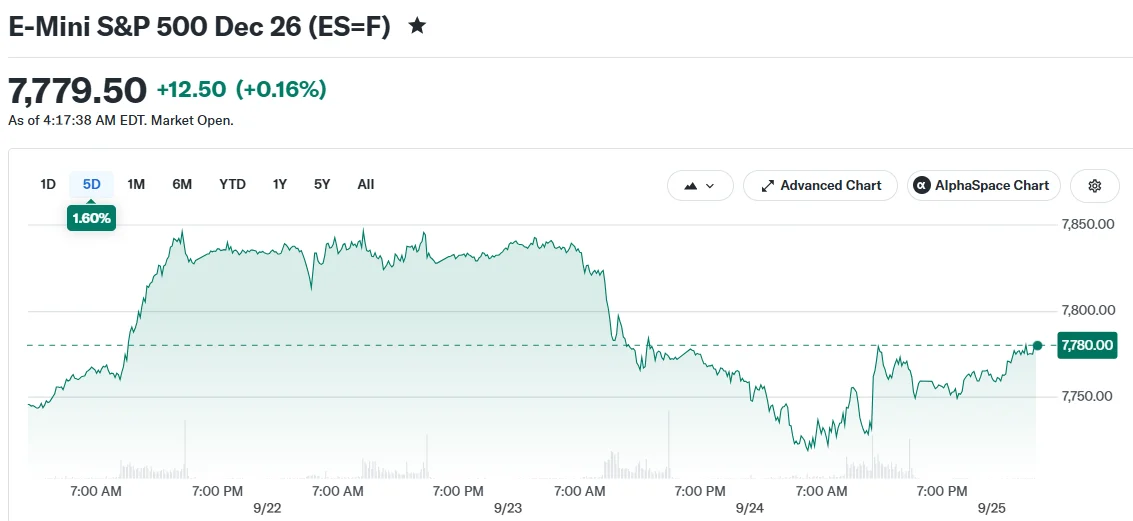
This upward movement followed a challenging period for equities as they struggled with turbulence in the fixed-income markets. Thursday saw the 10-year Treasury yield spike to 5.16%, marking its steepest level since the 2008 financial meltdown.
Treasury Yields Moderate After Reaching Multi-Year Peaks
As Friday trading approached, yields showed signs of stabilization. The 10-year Treasury note hovered around 5.17%, marginally below Thursday’s elevated levels.
Rick Rieder of BlackRock shared his perspective with Yahoo Finance regarding the recent bond market turbulence. He characterized the situation as “not a crisis but an eye-opener.”
According to Richard Reyle, chief investment officer at Questar Capital Partners, the fixed-income market is delivering an unmistakable message. His interpretation points toward the Federal Reserve maintaining its hawkish stance with potential additional rate hikes before year-end.
“So far, stocks have been able to withstand the rising bond yields, but any further increase from current levels is a negative for stocks, plain and simple,” Reyle said.
Elevated yields translate to higher borrowing costs across the economy, creating headwinds for both corporate earnings and equity valuations in the longer term.
Crude Oil Retreats Amid Diplomatic Developments in Middle East
Oil prices experienced downward pressure Friday morning. West Texas Intermediate crude slipped to approximately $92 per barrel, while Brent crude, the international pricing standard, hovered near $98 per barrel.
The decline followed a Reuters report indicating ongoing discussions between Washington and Tehran regarding the Strait of Hormuz. This critical maritime passage handles a substantial portion of worldwide petroleum transport.
Market participants interpreted these diplomatic efforts as potentially de-escalatory for regional tensions. The softening in crude prices contributed to the simultaneous easing in Treasury yields.
Nevertheless, retail gasoline prices across the United States held firm around $4.50 per gallon nationally, maintaining strain on consumer finances.
The commodity selloff negatively impacted energy sector equities during premarket hours. Shares of Chevron, Exxon Mobil, Devon Energy, and Occidental Petroleum all showed weakness before the market open.
The University of Michigan’s consumer sentiment index is scheduled for release Friday. This data will provide insights into whether American inflation expectations are beginning to moderate.
Chinese President Concludes Washington Visit
President Xi Jinping’s White House visit came to a close Friday. The diplomatic engagement featured an elaborate Thursday evening state dinner attended by leading American business figures.
However, the high-profile visit yielded limited tangible results in terms of policy shifts. Washington and Beijing seemingly agreed to maintain the current state of bilateral trade relations through the near term.
The meetings concluded without any announcements regarding tariff modifications or new commercial agreements.
Market focus will remain centered on Treasury yield movements and energy prices going forward. These two factors have emerged as the primary catalysts behind equity market volatility throughout the current week.
Source: Parameter