



FILTERED RESULTS
FILTERS
•
·
·
FILTERED RESULTS
U.S. Senate Blocks Clarity Act, Impacting Crypto Regulatory Framework
Analysis-Houthi advance in Yemen puts U.S. in a new bind
Yemeni Government Forces Strike Houthi Vessels in Taiz Region
Xi Sits Down With Modi on First Trip to India in Seven Years
Iraq and Iran to Jointly Investigate Drone Launchers on Border
RBI Rejects Tata Sons Plea to Nix Shadow Lender Tag, Reports Say
Bahrain Declines Participation in Iran Meeting Regarding Hormuz Strait
HDFC Bank Submits Names of Two CEO Candidates to RBI
Oil Supply Risks Rise After Saudi Pipeline Attack
Modi Seeks BRICS Unity as Global Tensions Rise
BRICS 2026: Modi Seeks Bigger Role For Global South
BRICS Countries Call for Maximum Restraint in the Middle East
Trump Signals US Wants Distance From Iran War
Iranian President Urges BRICS to Oppose Targeting of Civilian Infrastructure
Dell Technologies (DELL) Stock Reaches Record Peak as Founder Climbs to Third Wealthiest Globally
Markets Defy Logic: Stocks Surge 1% Despite Scorching Inflation Numbers
Rocket Lab (RKLB) Stock Gains Analyst Support Despite 46% Decline
GE Vernova (GEV) Stock: Is the Recent 23% Decline Creating a Strategic Entry Point?
Iraq Fires Maysan Commander After Drone Attacks on Saudi Arabia’s Pipeline
Tesla (TSLA) Semi Truck Expansion: European Launch Confirmed for 2027
Cathie Wood’s ARK Invest Pivots to Meta (META) and Rocket Lab in September Trading Activity
Nvidia (NVDA) Eyes $10B Stake in Anthropic’s Historic $2 Trillion IPO
General Motors to Develop Domestic Battery Supply Chains Amid Political Tensions
Iraqi Parliament Speaker Emphasizes State Control Over Weapons
Can Venezuela Rescue the Oil Market?
Can China’s Icicle woo global shoppers in a luxury downturn?
After the I.P.O., a Billion-Dollar Bill for Employee Paydays
Trump Criticizes Europe on Immigration, Trade, and NATO Cooperation
Iraqi Parliament Speaker Backs Urgent Investigation into Recent Attacks
Mexican Authorities Investigate Suspected Cartel-Linked Crypto Mining Operation
Iraqi Prime Minister Dismisses Police Chief in Maysan Province
Iran President and Abu Dhabi Crown Prince Hold Meeting in New Delhi
Iranian President Calls on BRICS to Address Unilateral Sanctions
HDFC Bank Submits Names of Two Candidates for CEO Role to RBI
China's Xi Urges Peace at BRICS Summit Amid Middle East Tensions
Donald Trump Voices Support for Irish Unification
U.S.-Canada trade war set to hit hard in midterm battleground states
Why a $5,000 Trump dividend check won’t solve your money woes
Nvidia (NVDA) Stock Analysis: CEO Jensen Huang Reaffirms $4 Trillion AI Market Vision
Xi Jinping Urges BRICS Nations to Uphold Historical Justice at Summit
Citi sees Fed delivering "a dovish hike" next week
Revolut Data Breach: Fraudulent Government Email Leads to Bitcoin Record Leak
Robinhood (HOOD) Crypto Trading Surges 61% Monthly But Lags 38% Behind 2025 Figures
Oil and Gas Markets Signal Winter Crisis and Rising Interest Rates
Hyperliquid (HYPE) Surges Past $82: Whale Accumulates $322M as Token Burn Accelerates
Former Anthropic Employees Resign Over AI Safety Failures, Warn of Existential Risks
War In the Middle East Crisis is Making Clothes More Expensive
Leaders Arrive At Bharat Mandapam
Trump Affirms Friendship with Saudi Crown Prince Amid Pipeline Attack Concerns
Bitcoin (BTC) Rallies Past $79K as CPI Data Shows Mixed Inflation Signals
What Many Miss Regarding the US-China Rivalry: New Economy
BRICS agrees to joint declaration in test of unity despite Mideast tensions
Trump says Iran war likely to end after midterms as Yemen fighting escalates
Maharashtra Pilots Asset Tokenization as India Embraces Blockchain for Power Grids and Bonds
Trump says Iran probably responsible for attack on Saudi pipeline
Trump Suggests Iran Likely Behind Saudi Pipeline Attack
Iran Signals Potential Shift in Nuclear Policy
Ethereum (ETH) Breaks Past $2,600 Despite Rate Hike Concerns, Reaches Multi-Month Peak
Ford Issues Recall for U.S. Vehicles Over Fuel Tank Hazard
Christine Lagarde: Europe seen from Normandy
Canadian boycott of US products pushes grocers to adapt, explore new supply sources
Iran Shifts to Offensive Military Strategy, Lawmaker States
BRICS 2026: Leaders Arrive At Bharat Mandapam
Canada seeks $1tn from investors looking for a haven from Donald Trump
News Quiz for September 12, 2026
Huawei Technologies Develops Large Language Model for Tourism Content
BRICS Members Reach Joint Declaration Condemning Unilateral War
Iran President Confirms Supreme Leader Mojtaba Khamenei is Alive
Chart of the Week: the long shadow of quantitative easing
Goldman Sachs Issues $120 Crude Oil Warning Amid Middle East Shipping Crisis


Key Takeaways
- Investment bank projects crude prices could climb to $120 per barrel amid worsening Middle East shipping disruptions
- Alternative scenario forecasts Brent falling to $80 if regional supply routes stabilize
- Bank favors long exposure to natural gas and diesel over traditional crude positions
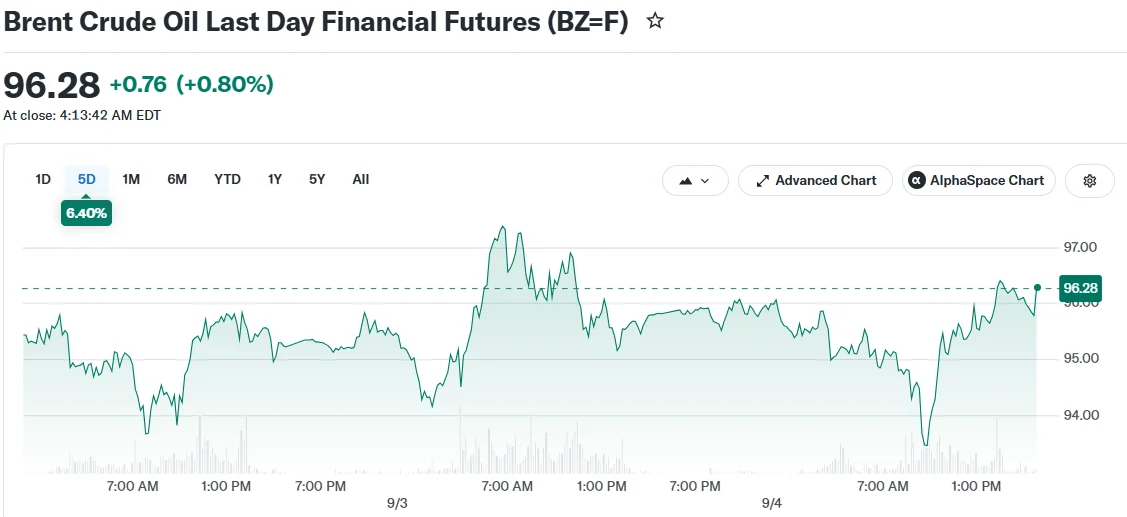
- Brent crude currently sits at approximately $97.55, reflecting a daily gain exceeding 1%
- Beijing’s demand patterns expected to moderate crude volatility but not gas or refined fuel markets
Goldman Sachs has issued a stark warning that crude prices may climb as high as $120 per barrel should shipping disruptions in the Middle East continue their upward trajectory. Conversely, the financial institution projects a potential retreat to $80 should regional tensions ease and normal export operations resume.
During a weekend interview with Bloomberg TV, Daan Struyven, the bank’s co-head of global commodities research, emphasized that recent developments highlight genuine threats of widening and intensifying maritime disruptions.
The current crisis revolves around the Strait of Hormuz, a critical chokepoint for worldwide petroleum shipments. Recent days have witnessed US military action against Iranian tankers, while Tehran has declared a newly restricted maritime zone adjacent to this vital waterway.
American naval assets are reportedly implementing a blockade of Iranian maritime facilities while simultaneously providing escort services for tankers from allied oil-producing countries exiting the volatile region.
Energy markets have responded with crude reaching its strongest position since July. Brent crude registered at $97.55 per barrel with a 1.32% increase, while West Texas Intermediate marked $92.64, advancing 1.28%.
Strategic Preference for Gas and Diesel Positions
Rather than advocating straightforward crude purchases, Goldman Sachs is steering investors toward alternative energy positions, specifically recommending extended exposure to international natural gas markets and refined petroleum products such as diesel fuel.
According to Struyven, supply disruptions affecting these particular commodities typically demonstrate greater severity compared to crude oil itself. Diesel valuations have experienced more than a 100% increase year-to-date, while natural gas has similarly outperformed crude during the comparable timeframe.
The prolonged conflict, now extending beyond six months, has elevated energy costs across the spectrum. Yet refined products and natural gas have demonstrated significantly steeper appreciation trajectories relative to traditional crude benchmarks.
This tactical positioning underscores Goldman’s assessment that investors stand to capture superior returns through these specific commodity channels rather than conventional oil futures exposure alone.
Beijing’s Influence on Energy Markets
Struyven indicated that Chinese demand dynamics are positioned to serve a balancing function within crude oil markets. Historical patterns show Beijing typically reduces import volumes as prices escalate, effectively establishing a ceiling on crude appreciation.
The bank does not anticipate China exercising comparable restraining influence within natural gas or refined product markets, however. This distinction leaves those sectors considerably more vulnerable to price volatility should regional hostilities persist.
Goldman’s $120 projection constitutes an upside scenario rather than a baseline expectation. This outcome hinges upon continued deterioration of shipping security conditions and sustained interruption of regional supply flows.
Currently, petroleum markets maintain a heightened state of alert. Developments surrounding the Strait of Hormuz continue to unfold, with market participants closely monitoring indicators that might signal either intensification or resolution of the standoff.
Source: Parameter