



FILTERED RESULTS
FILTERS
•
·
·
FILTERED RESULTS
U.S. Senate Blocks Clarity Act, Impacting Crypto Regulatory Framework
Analysis-Houthi advance in Yemen puts U.S. in a new bind
Yemeni Government Forces Strike Houthi Vessels in Taiz Region
Xi Sits Down With Modi on First Trip to India in Seven Years
Iraq and Iran to Jointly Investigate Drone Launchers on Border
RBI Rejects Tata Sons Plea to Nix Shadow Lender Tag, Reports Say
Bahrain Declines Participation in Iran Meeting Regarding Hormuz Strait
HDFC Bank Submits Names of Two CEO Candidates to RBI
Oil Supply Risks Rise After Saudi Pipeline Attack
Modi Seeks BRICS Unity as Global Tensions Rise
BRICS 2026: Modi Seeks Bigger Role For Global South
BRICS Countries Call for Maximum Restraint in the Middle East
Trump Signals US Wants Distance From Iran War
Iranian President Urges BRICS to Oppose Targeting of Civilian Infrastructure
Dell Technologies (DELL) Stock Reaches Record Peak as Founder Climbs to Third Wealthiest Globally
Markets Defy Logic: Stocks Surge 1% Despite Scorching Inflation Numbers
Rocket Lab (RKLB) Stock Gains Analyst Support Despite 46% Decline
GE Vernova (GEV) Stock: Is the Recent 23% Decline Creating a Strategic Entry Point?
Iraq Fires Maysan Commander After Drone Attacks on Saudi Arabia’s Pipeline
Tesla (TSLA) Semi Truck Expansion: European Launch Confirmed for 2027
Cathie Wood’s ARK Invest Pivots to Meta (META) and Rocket Lab in September Trading Activity
Nvidia (NVDA) Eyes $10B Stake in Anthropic’s Historic $2 Trillion IPO
General Motors to Develop Domestic Battery Supply Chains Amid Political Tensions
Iraqi Parliament Speaker Emphasizes State Control Over Weapons
Can Venezuela Rescue the Oil Market?
Can China’s Icicle woo global shoppers in a luxury downturn?
After the I.P.O., a Billion-Dollar Bill for Employee Paydays
Trump Criticizes Europe on Immigration, Trade, and NATO Cooperation
Iraqi Parliament Speaker Backs Urgent Investigation into Recent Attacks
Mexican Authorities Investigate Suspected Cartel-Linked Crypto Mining Operation
Iraqi Prime Minister Dismisses Police Chief in Maysan Province
Iran President and Abu Dhabi Crown Prince Hold Meeting in New Delhi
Iranian President Calls on BRICS to Address Unilateral Sanctions
HDFC Bank Submits Names of Two Candidates for CEO Role to RBI
China's Xi Urges Peace at BRICS Summit Amid Middle East Tensions
Donald Trump Voices Support for Irish Unification
U.S.-Canada trade war set to hit hard in midterm battleground states
Why a $5,000 Trump dividend check won’t solve your money woes
Nvidia (NVDA) Stock Analysis: CEO Jensen Huang Reaffirms $4 Trillion AI Market Vision
Xi Jinping Urges BRICS Nations to Uphold Historical Justice at Summit
Citi sees Fed delivering "a dovish hike" next week
Revolut Data Breach: Fraudulent Government Email Leads to Bitcoin Record Leak
Robinhood (HOOD) Crypto Trading Surges 61% Monthly But Lags 38% Behind 2025 Figures
Oil and Gas Markets Signal Winter Crisis and Rising Interest Rates
Hyperliquid (HYPE) Surges Past $82: Whale Accumulates $322M as Token Burn Accelerates
Former Anthropic Employees Resign Over AI Safety Failures, Warn of Existential Risks
War In the Middle East Crisis is Making Clothes More Expensive
Leaders Arrive At Bharat Mandapam
Trump Affirms Friendship with Saudi Crown Prince Amid Pipeline Attack Concerns
Bitcoin (BTC) Rallies Past $79K as CPI Data Shows Mixed Inflation Signals
What Many Miss Regarding the US-China Rivalry: New Economy
BRICS agrees to joint declaration in test of unity despite Mideast tensions
Trump says Iran war likely to end after midterms as Yemen fighting escalates
Maharashtra Pilots Asset Tokenization as India Embraces Blockchain for Power Grids and Bonds
Trump says Iran probably responsible for attack on Saudi pipeline
Trump Suggests Iran Likely Behind Saudi Pipeline Attack
Iran Signals Potential Shift in Nuclear Policy
Ethereum (ETH) Breaks Past $2,600 Despite Rate Hike Concerns, Reaches Multi-Month Peak
Ford Issues Recall for U.S. Vehicles Over Fuel Tank Hazard
Christine Lagarde: Europe seen from Normandy
Canadian boycott of US products pushes grocers to adapt, explore new supply sources
Iran Shifts to Offensive Military Strategy, Lawmaker States
BRICS 2026: Leaders Arrive At Bharat Mandapam
Canada seeks $1tn from investors looking for a haven from Donald Trump
News Quiz for September 12, 2026
Huawei Technologies Develops Large Language Model for Tourism Content
BRICS Members Reach Joint Declaration Condemning Unilateral War
Iran President Confirms Supreme Leader Mojtaba Khamenei is Alive
Chart of the Week: the long shadow of quantitative easing
Oil Prices Surge Past $100 as Middle East Tensions Throttle Global Supply


Key Highlights
- Brent crude surpassed the $100 threshold on Wednesday, marking its first climb above this level since the end of July amid intensifying U.S.-Iran hostilities
- American military forces confirmed destroying five Iranian oil tankers, while Tehran retaliated by targeting 10 vessels operating near the critical Strait of Hormuz
- Oil transit through the Strait of Hormuz has plummeted dramatically to under 2 million barrels daily, a sharp decline from the previous 8-9 million bpd recorded before military engagements intensified
- Houthi forces from Yemen launched aggressive strikes against Saudi Arabia’s energy sector this week, with the Jizan refinery among the facilities targeted
- International Energy Agency data reveals that global petroleum stockpiles decreased by 69 million barrels during July, coinciding with 8.3 million bpd of Middle Eastern production being offline
On Wednesday, [[LINK_START_1]]Brent crude[[LINK_END_1]] climbed above the significant $100-per-barrel threshold as intensifying military confrontations between American and Iranian forces amplified concerns about sustained disruptions to global petroleum supplies. Meanwhile, West Texas Intermediate followed suit with upward momentum, hovering near $96 per barrel.
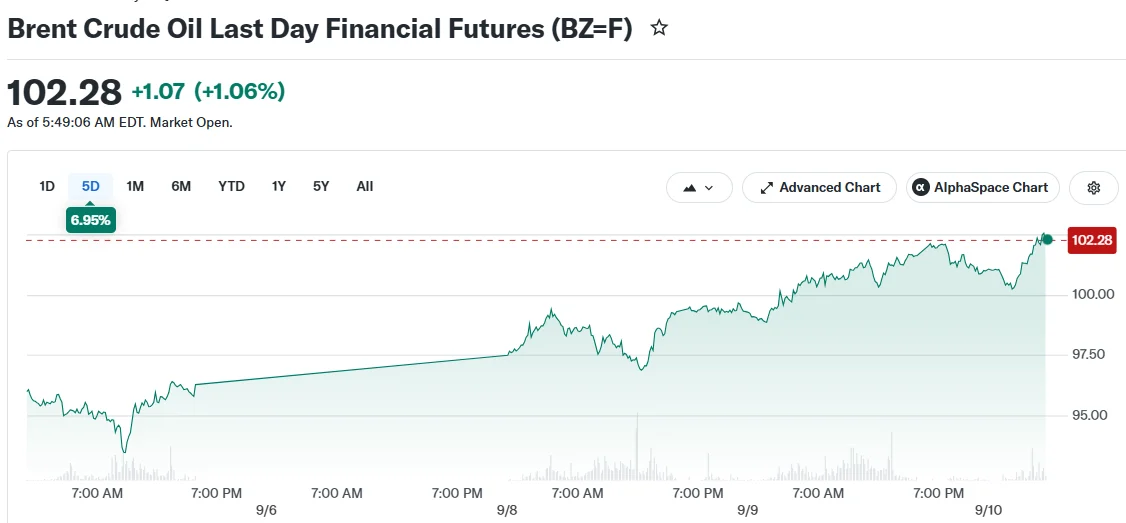
The current escalation witnessed Tehran launching assaults on 10 vessels operating within and surrounding the strategically vital Strait of Hormuz. Washington’s military response included sinking five Iranian tankers in Persian Gulf waters. Iran subsequently retaliated with an attack on an American military installation in Jordan.
The volume of crude oil transiting through the Strait of Hormuz has experienced a devastating collapse. Prior to the resumption of armed conflict, daily shipments ranged from 8 to 9 million barrels. Current figures show this has plummeted to less than 2 million barrels per day, based on analysis from Rystad Energy reported by Reuters.
Maritime tracking company Kpler reports that zero very large crude carriers have successfully navigated through the strait since September 2.
Regional Supply Infrastructure Faces Growing Threats
Several oil-producing nations in the Middle East have attempted to bypass the Hormuz bottleneck by redirecting shipments through overland pipelines to alternative export terminals. The United Arab Emirates has activated pipeline infrastructure connecting to Fujairah port. Iraqi crude is being channeled through pipeline networks reaching Turkey. Saudi Arabia has reversed the flow direction on its East-West pipeline system to access the Red Sea terminal at Yanbu.
However, these backup transportation routes are now facing security challenges of their own. Iran-supported Houthi militants operating from Yemen executed attacks on Saudi Arabian energy installations this week. The most recent assault targeted the Jizan refinery. Additional processing facilities across the Arabian Peninsula have similarly experienced hostile actions.
Market analysts at ANZ indicated in their research commentary that the ongoing pattern of reciprocal military strikes strongly suggests petroleum shipments originating from the Persian Gulf region will continue experiencing significant disruption for an extended period.
Global Reserves Declining as Conflict Persists
The International Energy Agency’s most recent monthly assessment indicated that 8.3 million barrels per day of Middle Eastern oil production capacity remained offline throughout July. During that same timeframe, worldwide petroleum inventories contracted by 69 million barrels, representing an average daily depletion rate of 2.7 million barrels.
Multiple physical crude oil pricing benchmarks have already exceeded the $100 mark. Murban crude, DME Oman, the OPEC reference basket, and India’s composite basket are all commanding prices above this threshold. Brent futures contracts have now crossed into this territory as well.
President Trump informed journalists on Wednesday that the military conflict would conclude following the November midterm elections. Conversely, reporting from the Wall Street Journal suggested that Trump’s senior advisers have cautioned the confrontation may extend throughout the remainder of his presidential term.
Currently, no formal peace discussions between Washington and Tehran have been reported. Seasonal petroleum demand typically experiences an uptick during the fourth quarter annually, which could drive prices even higher should supply constraints persist.
As of Thursday morning, Brent crude was trading at $101.22 per barrel.
Source: Parameter