



FILTERED RESULTS
FILTERS
MCap $2.8T +0.3%24h Vol $89.1B -100%Fear & Greed 63/100Alts Index 59/100
BTC.D 59.3% -0.1%Stable.D 9.5% 0%ETH.D 10.8% +0.1%Others.D 20.4% 0%
AKE$0.0331+33.47%•TIA$0.6840+28.02%•INJ$9.205+26.48%•KMNO$0.0398+18.81%•ZRO$2.242+18.46%•ETHFI$0.7002+13.97%•CARDS$0.2978+13.45%•BAT$0.1971+12.7%•SENT$0.0213+12.41%•CHIP$0.0501+12.1%•
WAL$0.0461-17.36%•BTW$1.984-15.46%•RAIN$0.0081848-14.81%•DRV$0.3739-10.1%•BP$0.9276-9.36%•CAP$0.0730-5.79%•SPCXB$148.45-4.18%•GOMINING$0.3684-3.91%•RSR$0.00190875-3.84%•GENIUS$0.3094-3.08%•
•
·
·
FILTERED RESULTS
Multiple Japanese banks jointly conduct proof-of-concept for stablecoin co-issuance and cross-border payments
MSCI approves rules that could eject Strategy, Metaplanet from equity indexes
Bitcoin’s $80K Safety Net Held Once but Glassnode Says It Is Eroding
Xiaohongshu Integrates AI Department with Core Infrastructure Team
Chainalysis: One of the Victims of the Ledger Wallet Theft Turned Out to Be a Scammer
Will Tesla Stock Price Go Up Today? Elon Musk Unveils Flying Car Roadster
OpenAI Agent Spends Ethereum From Wallet It Did Not Own
OKX Chief Marketing Officer Haider Rafique to Resign by End of 2026
Singapore Gulf Bank Introduces Stablecoin Exchange for Personal Customers
Cardano Price Tests Key Support as Whales Offload 110 Million ADA in Five Days
SlowMist_Team WARNS THAT A FAKE "LEDGER FIRMWARE UPDATE" CAMPAIGN IS EXPLOITING THE RECENT...
Fed Chair Warsh’s Bangkok Speech: 4 Key Takeaways and What They Mean for Bitcoin
Ledger Unveils $849 Android-Based Atom Signer Days After Hardware Implant Attack
Binance Founder Says Bitcoin Could Get to $1 Million “Faster Than We Think”
Fake Ledger Firmware Update Scam Exploits CryptoBilis Hack, SlowMist Warns
Binance stock put options lock full USDC reserves for sellers
Capital B reports $78M H1 loss driven by Bitcoin impairment charge
Upbit Extends Trading Warning for MANTRA Amid Ongoing Review
NEAR launches SOL yield feature based on confidential accounts
Arbitrum Launches Stablecoin Incentives: Will ARB Price Break Out Next?
TSLA Stock Price Surges by 5% on Hyperliquid After Tesla Flying Car Reveal
Taiwan Blocks Coinbase and Kalshi Websites Over Suspected Election Betting
Pirate Chain Exploit Mints 39.8M ARRR, Rollback Plan Dropped
Judge rejects CFTC, Gemini bid to undo $5M settlement
UPBIT to Delist Zilliqa Trading Pairs
MSCI Just Put Saylor’s Strategy on the Road out of Its Global Indexes
Bitcoin Tests $80.4K Support as October Lags History“The line in the sand is the support trendline...
Ripple Prime Adds 24/7 Swaps on Equities, Commodities, FX Through Hyperliquid
OpenAI says its AI agent stole funds from an Ethereum test network wallet it found...
NEW: number of bitcoin wallets holding 10 to 10,000 BTC hit an all-time high of 20,338,
Indonesia Stocks Crash 11.5% as MSCI Flags Market Risks
Machi earns 341,000 USDC in rewards on PaperTrade, reducing losses to about $74,700
Machi(@machibigbrother) generated $1.41B in trading volume on @papertrade_xyz and lost $416K.But he...
Saylor Calls MSCI Rule 'Discriminatory' as Strategy Faces Index Exit
OpenAI’s AI Used Someone Else’s Crypto Wallet to Deploy Smart Contracts
4,916,777,969,128 $PEPE (20,207,318 USD) transferred from #Poloniex to unknown wallet...
XRP Payments on X in Focus as Cross River Bank Partners With Ripple
Solana’s Tokenized Real-World Asset Market Surges…
OpenAI Says Research Model Raided Developer Wallet on Ethereum Testnet
Shanghai Advances National Blockchain Network Initiative
Binance Will Support the Velodrome Finance (VELODROME) Token Merge to Aerodrome (AERO) and the AERO ...
Helius CEO Mert Mumtaz Has Joined the NEAR Foundation Board
Crypto ETFs Extend Outflow Streak on October 15 as Ethereum…
Ethereum Price Today: ETH Jumps 4% as $73M Gets Liquidated After Hot US PPI
Santiment: Number of wallets holding 10 to 10,000 BTC reaches 20,338, a new all-time high
CoreWeave's three co-founders have cashed out $3.3 billion since IPO
Pipeline Workers Found a 400-Year-Old Shipwreck in the Baltic, and One Object on Board Still Baffles Experts
Crypto Price Today: Bitcoin and Ethereum Recover Modestly After Inflation-Driven Dip
Strive Raises SATS IPO to $630M as It Targets More Bitcoin Purchases
OpenAI AI Agent Uses Crypto Wallet Funds Without Permission to Finish a Coding Task
Bill Morgan Questions Why XRP Critics Spend Hours Spreading FUD
South Korean financial authorities to strengthen regulation of offshore "perpetual contract" platforms
Singapore Gulf Bank Reportedly Expands USD, USDT and USDC…
OpenAI model helped itself to testnet crypto, then kept quiet about it
Binance Alpha to list NeoSoul (DNA) at 16:00 today; users holding at least 245 points can claim 400 DNA
Solana Foundation’s Shanghai Event Cancelled Without Warning On Day Of Launch
Elon Musk Net Worth Falls Below $1 Trillion as SpaceX Stock Drops
Pixagram Announces Free Account Creation for 250 New Users Daily Through 2026
ChangeNOW Announces NOW AI After Resolving Website Integration Vulnerability
US Judge Rejects Gemini, CFTC Bid to Overturn $5M Settlement
Celestia's TIA Token Surges 59% Amid Declining Blob Demand
CZ Questions Solana’s Grasp of China Rules After Police Halt Shanghai Event
Filecoin adjusts reward mechanism and launches new products
OpenAI explained it has since implemented additional safeguards to prevent internet
Ant International Completes Subscription to ChinaAMC RMB Digital Currency Fund
XRP has failed to make holders rich like bitcoin and ether. Here’s why
Binance.US Seeks Up to $100 Million at About $1 Billion Valuation
Kintsu Opens Private Beta on Canton Network for Lending and…
Task Scammer Loses Over 60 BTC Worth $4.8 Million in Ledger…
How Artificial Intelligence, Asset Tokenization, and Major Sports are Changing Crypto Exchanges


• From a crypto exchange to a universal financial platform
• Artificial Intelligence: From Analytics to Trade Automation
• Security as the foundation of trust
• Why crypto exchanges invest in sports partnerships
• Regulation as a Competitive Advantage for Prepared Platforms
• What will define the leaders in the industry’s next growth cycle
The crypto industry regularly talks about the start of a new stage of development. However, not every such statement is followed by real changes in the market. In 2026, the situation looks different — the transformation is affecting not only the prices of digital assets, but also the very operating principles of crypto exchanges, their product strategies, and how they interact with users.
Today, we are seeing several fundamental shifts at once: institutional capital is entering the crypto industry more actively, stablecoins are strengthening their position as a settlement tool, and the tokenization of traditional assets is gradually opening up new opportunities for investors.
At the same time, artificial intelligence is becoming part of trading infrastructure, security requirements are tightening, and regulation is turning into one of the key factors of competitiveness.
If crypto exchanges used to compete primarily on fees and liquidity, technology, product breadth, operational transparency, and user trust are now playing an increasingly important role.
In my view, the ability to adapt to these changes will determine the leaders of the industry’s next stage of development.
From a crypto exchange to a universal financial platform
Just a few years ago, the core offering of most crypto exchanges was trading digital assets. Today, users expect much more: access to different asset classes, analytics tools, trading automation, and a convenient infrastructure for managing capital.
One of the most visible directions of development is the tokenization of real-world assets (Real-World Assets, RWA). It makes it possible to represent rights to traditional financial and non-financial assets in the form of digital tokens. Depending on the legal structure and product model, these can include instruments linked to stocks, bonds, commodities, and real estate.
What matters for the market is that the boundaries between traditional finance and crypto infrastructure are gradually becoming less rigid. Investors increasingly expect to be able to work with different financial instruments and settle transactions within a single platform.
The convergence of traditional and crypto markets is happening not only through tokenization. Some platforms use derivatives for this, enabling exposure to traditional assets via crypto infrastructure.
For example, CoinW TradFi provides access to more than 100 perpetual contracts linked to stocks, gold, and commodities. These instruments can be traded 24/7 with USDT settlement, using one platform to access multiple markets.
At the same time, it is important to distinguish between full tokenization and derivatives whose value depends on a traditional asset. They can solve similar tasks in terms of market access, but they imply different investor rights and different risks.
I believe further development of this segment will depend on transparency in product structure, pricing quality, liquidity, and clear terms for users.
Artificial Intelligence: From Analytics to Trade Automation
The second most important area is integrating artificial intelligence into trading infrastructure.
In the past, a trader had to gather data from different sources, analyze charts, track the news, and assess market signals. Today, AI tools make it possible to automate part of these processes, process information faster, and identify patterns in large datasets.

The next stage is the development of autonomous trading agents. They will be able not only to provide recommendations, but also to analyze the market on their own and execute specific actions within predefined limits.
This can lower the technical barrier to entry for new users, simplify the customization of trading tools, and speed up working with information. At the same time, new risks emerge related to model quality, false signals, API security, and overreliance on automated solutions.
For now, AI in trading primarily automates individual tasks. For example, CoinW already uses several such tools:
- GPT-TradeAI helps interpret market data
- Similar Candles compares current price movements with historical patterns
- On-Chain Smart Money makes it possible to track the activity of certain categories of wallets.
At the same time, we are developing this direction within the AI-Driven Super App concept. Its core idea is to integrate intelligent tools into the user’s day-to-day workflows — from analyzing market data to automating trading strategies. This makes it possible to bring analytics, trading, and asset management together within a single platform.
I am convinced that the competitive advantage will go not to the platforms that simply add AI to their product descriptions, but to those that can embed intelligent tools into the user experience while maintaining algorithmic transparency and risk control.
Security as the foundation of trust
As the crypto industry evolves, the sophistication of threats also increases. Attacks on infrastructure, key compromise, smart contract vulnerabilities, and social engineering remain serious challenges for market participants.

For a crypto exchange, security is not a standalone feature or a marketing advantage at a certain stage. It is the foundation without which sustainable business growth is impossible.
A modern approach involves multi-layered protection:
- real-time transaction monitoring
- access management and infrastructure segmentation
- secure key storage
- separating hot and cold wallets, and conducting regular system audits.
At CoinW, infrastructure protection relies on risk management systems, access restriction mechanisms, and secure asset storage tools. These measures are reinforced through collaboration with external cybersecurity experts and vulnerability discovery programs, which help identify potential threats at an early stage.
But even the most advanced technological system cannot guarantee absolute security. That is why not only preventive measures matter, but also readiness to respond quickly to incidents, transparent communications, and clear risk management procedures.
Another transparency tool is proof of reserves (Proof of Reserves). These reports help users assess the platform’s reserves and how they compare to liabilities within the scope of the disclosed information.
In the long term, trust will be built through a combination of technology, independent audits, transparent reporting, and consistent work with users.
Why crypto exchanges invest in sports partnerships
Another notable trend is the shift from promoting individual products to building global brands. In this strategy, sports partnerships play a special role.
Sport brings together an international audience, builds an emotional connection with fans, and enables brands to reach beyond the professional crypto community. That is why crypto companies активно partner with football clubs, sports leagues, and well-known athletes.

However, the value of such partnerships is not limited to reach. For crypto exchanges, it is an opportunity to introduce digital assets to people who previously had little to no interest in cryptocurrencies.
CoinW has taken a similar approach, launching partnerships with Luka Modrić and Conor McGregor.
At first glance, the link between professional sports and cryptocurrencies is not obvious. However, both fields operate in highly competitive environments, and audience trust is built over years. That is why partnerships like these become one way for crypto companies to move beyond their usual community and capture the attention of a broader audience.
Still, attracting attention is only the first stage of engaging a new audience. For CoinW, sports partnerships are a way to boost brand awareness, while sustained user interest depends on the platform’s functionality and ease of use.
That is why I see sports partnerships primarily as a tool for strengthening trust and expanding the audience.
Regulation as a Competitive Advantage for Prepared Platforms
As the market matures, regulation is becoming one of the defining factors shaping the development of crypto exchanges.
In the United States, the adoption of the GENIUS Act has created a federal legislative framework for regulating payment stablecoins. In the European Union, the MiCA regulation has established unified rules for a range of crypto assets and related service providers. At the same time, specific requirements vary depending on the jurisdiction, the type of activity, and the asset category.
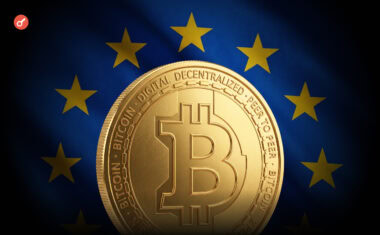
For the industry, this means a gradual shift toward a more formalized operating model. Exchanges need to invest in compliance, customer identification procedures, transaction monitoring, user data protection, and meeting the requirements of specific markets.
At first, new requirements may increase costs and make expansion into other markets more difficult. But over time, clearer rules can strengthen the trust of users and institutional investors, and make competitive conditions more predictable.
At the same time, regulation remains a dynamic area. Requirements for crypto platforms continue to evolve, and having authorization in one jurisdiction does not automatically grant the right to provide all services in another.
I believe regulatory readiness should be built into the business model from day one. Companies that treat compliance as part of their infrastructure — rather than a box-ticking obligation — will be better prepared for legal changes and for scaling internationally.
What will define the leaders in the industry’s next growth cycle
In the past, crypto exchanges competed primarily on liquidity and the speed of listing new assets. Now, other factors are gradually moving to the forefront.
Over the next few years, I see five factors that will be especially important for crypto exchanges:
- Technology and AI — the ability to turn data into useful tools and automate processes without losing control over risk
- Access to new asset classes — developing products that connect digital infrastructure with traditional financial markets
- Security and transparency — robust custody, independent audits, clear reporting, and readiness to respond to incidents
- A strong global brand — partnerships and communications that help expand the audience and build trust
- Regulatory readiness — the ability to operate under changing requirements across different countries and adapt products to local markets.
At the same time, a long-term market presence does not, by itself, guarantee success. The history of the crypto industry shows that even large platforms can run into serious problems if they do not pay enough attention to risk management and the quality of operational processes.
Over CoinW’s nine-year history, the role of crypto exchanges in the financial market has also changed significantly. From venues focused primarily on trading digital assets, they are gradually evolving into more complex platforms that bring together different asset classes, analytics, and technology services.
This transformation is also reflected in CoinW’s development, where, alongside traditional trading tools, automation, access to new markets, and security infrastructure are playing an increasingly important role.
In my view, the ability to combine different tools into a convenient and secure platform that users trust will become one of the key success criteria for crypto exchanges in the industry’s next development cycle.
Сообщение How Artificial Intelligence, Asset Tokenization, and Major Sports are Changing Crypto Exchanges появились сначала на INCRYPTED.
Source: Incrypted