



FILTERED RESULTS
FILTERS
•
·
·
FILTERED RESULTS
Kremlin Urges Lifting of Sanctions on All Russian Citizens
Yields Can Fall on Good Oil News, Bad Eco Data, JPM’s Berro Says
Russian FinTech Allegedly Laundered $6.9 Billion Via Global Banks
Monzo's EU CEO Resigns to Start New Venture
Kremlin Expresses Concerns Over U.S. Military Bases in Greenland
Nvidia’s Valuation Comes Back Down to Earth
Xi Jinping to Discuss U.S. Arms Sales to Taiwan with President Trump
European shares inch higher as UN diplomacy signals pull crude lower
U.S. Markets Prepare for Key Economic Indicators and Earnings Reports
U.S. Denies Visa to Russian Deputy Foreign Minister
China Expands Drug Chemicals Control Ahead of Xi’s Trip to US
Indonesia to Form New Body to Oversee Land Conflicts, Reform
Alibaba unveils new AI chip, calls it China’s most powerful; shares gain
Taiwan minister says he was not "belittled" in China during official visit
What endlessly searching for a job can do to your mind
Saudi Arabia Running Tests to Resume East-West Oil Pipeline
Former President Trump Attends UN General Assembly with Packed Schedule
Kremlin Criticizes U.S. Visa Denial, Plans Discussions with Washington
What the world’s best climber can teach us all about giving to charity
China supports automaker investments in Europe, minister says
Wall St futures pause after AI rally, focus on Mideast tensions
Ineos idles three UK chemical plants as gas prices soar
Promenaut Launches Agent Workflow Platform at HSBC
Bank of America Raises Brent Oil Price Forecast Amid Ongoing Middle East Tensions
Iran ready to reopen Strait of Hormuz if US eases military pressure and lifts blockade
Russia reports diplomatic talks on Turkey’s Black Sea grain plan
BofA lifts European power price assumptions, shuffles ratings
UK factory orders show best performance since July 2023, CBI survey shows
Switzerland’s trade surplus almost doubles in second quarter
UBS CEO calls 90% capital proposal no real compromise
Corporate bond buyers get picky with flood of AI debt
Analysis-From smart glasses to AI pins, privacy fears challenge tech’s next big bet
FirstFT: How a Kremlin-backed forgery scheme fooled global banks
Saudi Arabia restarts East-West oil pipeline, to resume exports from Yanbu, sources say
Banks warn AI shopping bots raise scam, fraud and data-privacy risks
Switzerland’s trade surplus nearly doubles in second quarter
Saudi Arabia Resumes Crude Oil Exports from Yanbu Port
Maye Musk Confirms Elon’s Genuine Intent to Relocate to Mars
Ozempic Maker Novo Looks to Target Hair Loss in Consumer Push
US Stocks Hold AI Gains as Brent Slips Below $98: Markets Wrap
Luxury Earnings Estimates Look Too Optimistic, RBC Analysts Say
Ineos Idles Three UK Chemical Plants as Energy Costs Surge
Deutsche Bank shifts to two BoE rate hikes. Here’s why
Iran offers to unblock Hormuz within 7 days in diplomacy push - Kyodo News
U.K. Government Borrowing Rose in August as Budget Looms
Silver Prices Supported by Middle East De-escalation Hopes and Fed Policy
Iran Offers to Reopen Strait of Hormuz Amid U.S. Military Blockade
Greenback Surges to Seven-Week Peak Amid Fed Rate Speculation and Middle East Tensions
Iran Faces Deepening Economic Challenges Amid Crude Oil Export Issues
‘There Are No VPs, SVPs’—Why Hut 8 Eliminated Most Traditional Job Titles
Why is On stock surging today?
AI and earnings keep driving markets as focus shifts to Trump-Xi summit
Data suggests global luxury demand has slowed 2-3ppts in 3QTD vs 2Q: BofA
Tencent (TCTZF) Stock Surges 5% on Launch of Advanced AI Image Generator
Five Key People Shaping The Battle for $185 Billion Tata Group
Trump Crypto Venture World Liberty Made Big Money as Plans Fell Short
Iran Sets Conditions for Resuming Negotiations with the United States
Nationwide Building Society Partners with Equifax for Free Credit Score Access
TUI (TUIFF) Stock Slides 2% as Rising Fuel Prices and Delayed Reservations Weigh on Outlook
Novo Nordisk (NVO) Stock Plunges 8%: Should Investors Be Worried?
Alchemy Integrates Mastercard's Agent Pay for Enhanced Online Purchases
Higher energy prices could spark a broader inflation upswing. Read more in today’s WSJ Economics newsletter:
Iran Proposes Early Opening of Strait in UN Discussions
TD Cowen sees diesel export quota as possible policy move
Why is Key stock gaining today?
Tikehau faces rival bids for struggling Italian bottle-cap maker Tapí
Iran Proposes Opening Strait Within Week If US Blockade Ends
Silver Lake takes legal action against Icahn and hedge funds over Endeavor feal
Stock Market Today: Tech Rally Fades
European Gas Markets Recover Following Sharp Decline Amid Iran Diplomacy Speculation


Key Points
- European gas futures climbed approximately 1.6% on Tuesday following Monday’s steep 7% decline
- Monday’s sharp drop followed reports of President Trump’s willingness to engage in diplomatic discussions with Iran’s President Pezeshkian during the UN General Assembly
- Markets briefly priced in reduced supply risk as potential U.S.-Iran dialogue suggested easing Middle Eastern tensions
- Tuesday’s recovery reflects traders tempering optimism as concrete diplomatic agreements remain uncertain
- Germany faces winter supply concerns with below-average gas storage levels and weaker-than-expected tender activity
European natural gas futures recovered ground on Tuesday, clawing back losses after experiencing their sharpest single-session decline in approximately eight weeks.
The TTF front-month contract for Dutch delivery, serving as Europe’s primary pricing benchmark, advanced 1.6% to approximately 78.80 euros per megawatt-hour. Britain’s NBP contract mirrored this gain, reaching around 195.40 pence per therm.
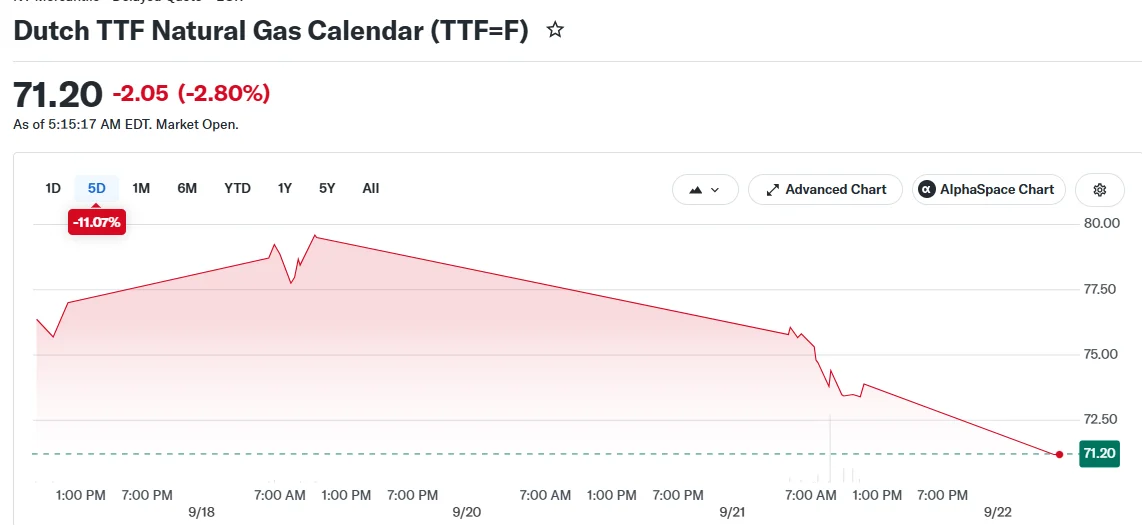
These contracts had plummeted over 7% during Monday’s trading session, marking their most significant single-day percentage loss in nearly two months.
The Monday sell-off was triggered by reports indicating that President Donald Trump expressed willingness to pursue direct diplomatic engagement with Iranian President Masoud Pezeshkian, who is currently attending the UN General Assembly meetings in New York.
This development ignited speculation that renewed diplomatic channels might help resolve the ongoing seven-month Middle Eastern conflict. Energy traders swiftly adjusted positions, reducing risk premiums associated with potential supply disruptions through the strategically vital Strait of Hormuz.
The Strait of Hormuz represents a critical bottleneck for worldwide energy transportation. Any perceived threat to maritime traffic in this corridor typically elevates energy commodity prices.
Traders Recalibrate Initial Enthusiasm
By Tuesday’s trading session, market participants had moderated their initial optimism. Traders acknowledged that achieving meaningful diplomatic progress remains highly uncertain, while physical supply constraints through the Persian Gulf region persist.
Brent crude futures also declined modestly on Tuesday, extending the previous session’s 3% retreat. Industry reports indicate that energy producers and maritime operators are increasingly utilizing overland pipeline infrastructure and alternative loading facilities along Oman’s coastline to circumvent Gulf transit challenges.
These workaround routes are partially alleviating supply anxieties, contributing additional downward price momentum alongside the diplomatic news flow.
German Storage Shortfalls Heighten Winter Supply Anxiety
Germany’s recent gas-storage procurement tenders attracted lower-than-anticipated participation volumes, exerting some downward influence on pricing.
Nevertheless, Germany’s aggregate storage capacity remains significantly below historical norms. This situation heightens anxiety regarding energy availability as the winter heating season approaches and consumption traditionally intensifies.
The European Central Bank has also raised red flags in its recent Economic Bulletin. The institution observed that wholesale gas price surges now translate to retail inflation impacts within one to three months across more than half of eurozone member states. This accelerated transmission means consumers could experience the consequences of any sustained price increases relatively rapidly.
Currently, energy markets have adopted a cautious stance. Market participants are closely monitoring developments from New York, where any substantive updates regarding U.S.-Iran diplomatic discussions this week could trigger significant price volatility in either direction.
Germany’s depleted storage reserves continue to represent a significant vulnerability as the region approaches the winter period.
Source: Parameter