



FILTERED RESULTS
FILTERS
MCap $2.8T -1.4%24h Vol $14125.5T +12747922%Fear & Greed 64/100Alts Index 53/100
BTC.D 59.4% +0.6%Stable.D 9.4% +0.1%ETH.D 11.2% +0.1%Others.D 20.0% -0.8%
MET$0.5041+60.92%•ALGO$0.1383+16.87%•JUP$0.3783+16.52%•W$0.0160+15.41%•RAY$2.466+13.19%•CRV$0.3878+10.63%•CVX$2.279+9.66%•STRK$0.0547+9.4%•JTO$0.5670+9.18%•TIA$0.4847+7.17%•
NMR$13.908-16.36%•BP$1.053-16.35%•CAP$0.0725-16.34%•MINA$0.0861-12.87%•DRV$0.3630-11.6%•BR$0.5392-10.74%•ZEC$1,220.91-7.32%•AKE$0.0279-6.72%•VVV$24.695-6.58%•CASHCAT$0.1241-6.57%•
•
·
·
FILTERED RESULTS
ESMA requires crypto service providers to stop offering non-MiCA-compliant stablecoin services, with a 3-month wind-down
IREN Stock Falls 6.3% as Debt-Funded Data Centers Sell Off…
Bitcoin ETFs Bleed $485M as BTC Falls Toward $82K — Bearish Move Ahead?
Starknet is considering becoming an independent Layer 1 blockchain to control its own
PeckShield: 79th Vault attacked, losing about $12.51 million
Market Analyst Calls Cardano Data “Insane,” Insists ADA Is Far From Dead — Here’s Why
Hyperliquid Founder Considers Options Trading for Future Ventures
ESMA Orders EU Crypto Firms to Cease Non-Compliant Stablecoin Services by January 2027
Bitcoin Sees $4.9 Billion in Monthly Inflows Amidst Existing Holder Activity
$110B Gone From Crypto Markets in 36 Hours as Bitcoin Dives Below $83K: Market Watch
India vs Elon Musk: Starlink’s Global Wall of Bans, and the Crypto Thread Running Through It
Bitcoin monthly ‘new money’ inflows near $5B as BTC price rally stalls
ESMA gives crypto firms 3 months to exit non-compliant stablecoins
doublezero CO-FOUNDER Austin_Federa ACCUSES solana OF MOGGING solanamobile EVANGELIST...
OpenAI and Ironclad Collaborate to Enhance AI in Complex Contracting Workflows
Circle has partnered with SAP-backed Tereina to bring USDC and EURC stablecoin payments
Starknet Explores Transition to Layer 1 for Enhanced Security Against Quantum Threats
Standard Chartered to expand institutional crypto and RWA custody to Singapore
OpenAI Shares Advances in Mathematics Through AI Models
Hackers Attack Another Bitcoin Project as Ark’s Second Exploited
XRP Falls 4.2% Below $1.44 After Failing to Break $1.50
Santiment: Bitcoin Whales Accumulated 86,702 BTC Over Three Weeks
Jump Trading integrates ChatGPT to enhance quantitative research
Foundry's founding CEO Mike Colyer is stepping down after seven years, Bitcoin
Manus parent company Butterfly Effect completes new funding round of over $500 million
ByteDance Dominates China's Data Center Market with Significant Capacity
SuiNetwork CO-FOUNDER EmanAbio ANNOUNCES THAT datafdn IS MIGRATING TO SUI AND...
Raydium Price Prediction: Can RAY Turn the Current Breakout into a Move Toward $3.5?
Greece prepares to levy 10% capital gains tax on cryptocurrency
Telecom Operators Embrace Open AI Models for Customization and Control
A whale who bought 257,928 $HYPE($902K at the time) at only $3.5 ~2 years ago is selling $HYPE for...
Jeff Yan: If I Were Building a Product Today, I'd Look Into OptionsHyperliquid Labs co-founder Jeff...
*TRUMP TO SAY ALL MILITARY OBJECTIVES MET IN IRAN WAR: POLITICO ...
Samsung Wallet Taps Solana for USDC Transfers on 82M US Galaxy Devices
SEC to Host Virtual Compliance Seminar for Investment Firms in November 2026
Greece's finance ministry has proposed a 10% cryptocurrency capital gains tax, down from
Russia Names Its First Registered Crypto Operators, Led by Sberbank
Atlassian and OpenAI Strengthen AI Integration for Enterprise Workflows
3 Major Altcoins That May Plunge Further as Analyst Flags More Downside
Bitcoin Dumps to 17-Day Low, But Key Metric Flashes Rebound Signal
Vitalik Buterin urges calm as AI raises new fears over Bitcoin and Ethereum cryptography security
AguilaTrades(@AguilaTrades), who has been liquidated 33 times and lost a total of $37.64M, is back a...
Flávio Bolsonaro's Election Lead Boosts Brazilian Markets
NEW: U.S. government-linked wallets transferred a total of 6,215 BTC ($516 million) and 119 million
Ripple Enters Wall Street’s Leveraged ETF Game With Swap Financing
How AI Agents Execute Payments in Six Stages
IMF: Tokenization Market Still Small and Fragmented; Clear Regulatory Framework and Enhanced Interoperability Needed
Samsung integrates USDC to overhaul cross-border remittances for 82 million Galaxy users
IMF said tokenized repos average $300 billion to $350 billion in daily volume,
IMF Reports Daily Volume of Tokenized Repos Ranges Between $300 Billion and $350 Billion
Wells Fargo in Talks With Kraken Parent Payward Over Crypto…
Anthropic Expands Cyber Verification Program with New Access Tiers
Netflix’s Co-CEO Doesn’t Read Business Books. He Rereads One 1902 Novel About a Ship Instead
IMF Highlights Challenges in Growing Tokenized Market
NVIDIA Introduces Unified GPU Networking Framework with DOCA GPUNetIO
Samsung Wallet to add USDC transfers for US Galaxy users in October
Samsung Wallet Will Open Access to Stablecoins for Galaxy Users in the US
NEAR enters crypto’s top 20 after 140% surge in 30 days
Solana (SOL) Sees Record Tokenized Equity Growth in September 2026
Ethereum Researcher Warns AI Could Break Crypto Wallet Security Before Quantum Computers DoEthereum...
SEC Pursues Final Judgment Against Former Western Asset Co-CIO Ken Leech
Binance Highlights Security Framework and SAFU Fund Evolution
Crypto investment firm Deus X Capital shuts down as backers pursue separate strategies
Radisson Hotel Group Integrates Hotel Discovery into ChatGPT
Nasdaq Backs One Trading to Push 24/7 Trading in Europe
A smart money address cut $11.77 million in HYPE over 10 days, with estimated profit of $11.26 million and a return of over 2,214%
Hyperliquid Labs Begins $330 Million HYPE OTC Distribution,…
Crypto Market Has Nearly Completed Its Shift Into an Uptrend Cycle“At the bottom of every downtrend...
Biren Technology Seeks to Raise $515 Million for AI Expansion
Binance Will Judge Its Marketing on User Retention, Interim CMO Eowyn Chen Says


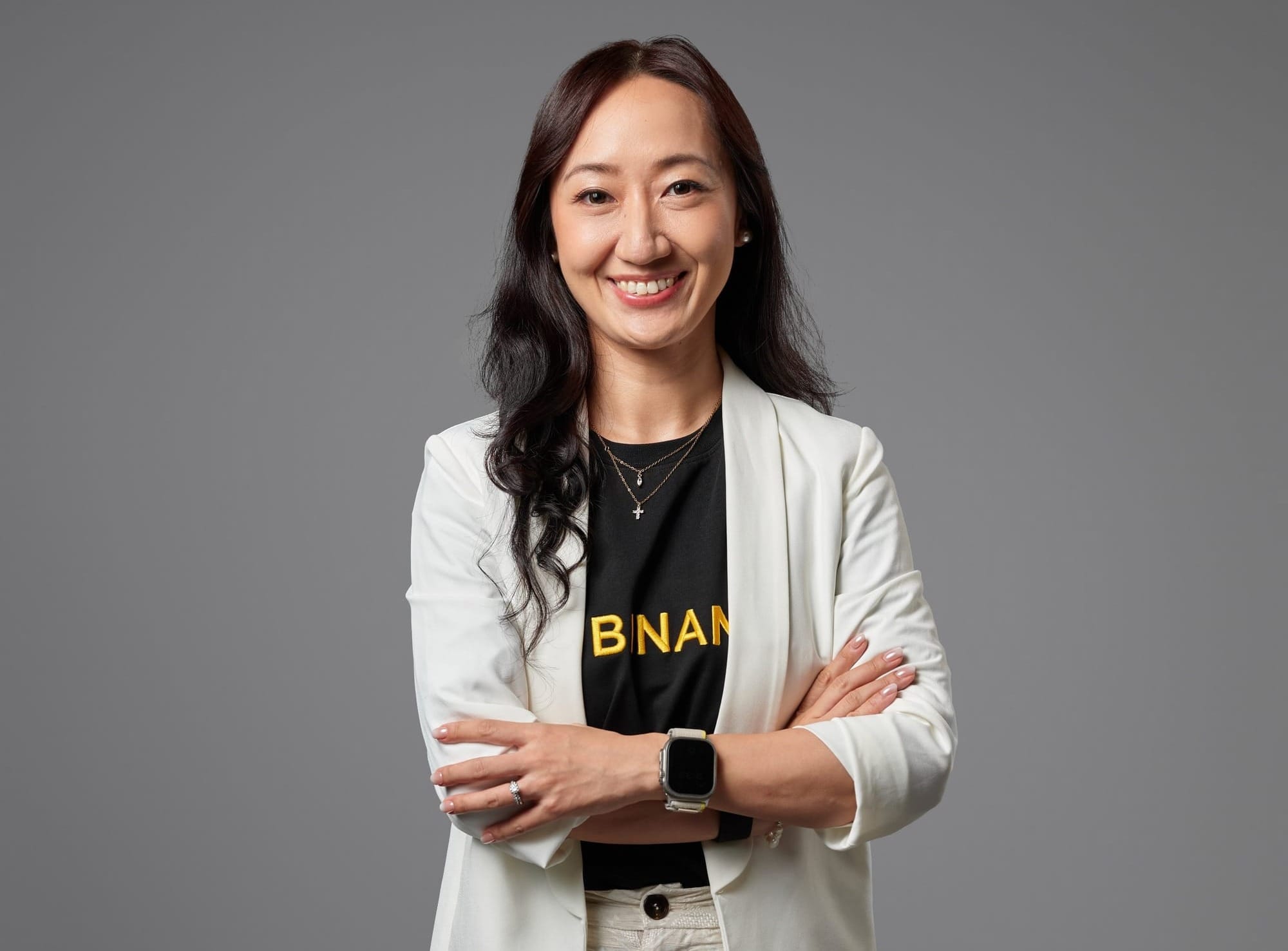
Binance plans to judge its marketing on whether users stay, according to interim chief marketing officer Eowyn Chen, who described the exchange as becoming "a global, multi-asset financial platform for a wider part of people's lives" with a time horizon of 2030.
In an email interview with Blockhead, Chen said marketing's job at that kind of platform is translation: "explaining what is changing, why it matters, and what it means for people."
Chen joined Binance in 2018 and most recently ran Trust Wallet as CEO. She took over marketing after CoinDesk reported in May that Rachel Conlan would leave on June 15 after three years in the role. Chen said the move followed her usual approach to career decisions. "I rarely line up the next job before leaving the current one," she said. "What I look at is the problem in front of me, and whether I can add real value to it."
Budgets and the case for foundations
The handover came while other exchanges were trimming marketing spend. CoinDesk noted that Crypto.com's CMO had also departed and that Bybit's CEO had announced plans to end its Formula 1 sponsorship. Asked whether shrinking budgets amount to a retreat or a correction, Chen conceded part of the criticism. "A lot of money in this industry was not well spent," she said.
She pointed to Trust Wallet, where she said the marketing budget typically ran around $20,000 a month while users grew from 40 million to 230 million, as the sequence she wants to follow at Binance: build a product and organic channels that hold up, then spend to amplify them. "The product is the one; paid marketing adds the zeros behind it," she said. "But if there's no one, no matter how many zeros you add, you still end up with zero."
In her view, a weak market makes that discipline easier to enforce. "Bear markets tend to wash out the superficial," Chen said. "They force teams to get the fundamentals right and sharpen their judgment." She named Binance Academy, local educators, and plain explanations of fees and risks at the moment of decision as the spending she would protect. "What matters is discernment, not a dollar figure," she said. "A brand still needs to inspire – it also has to deliver on that inspiration."
Trust as the objective
Chen said every metric she uses serves one objective, which is trust, and she acknowledged that it is hard to measure directly. "I'm still exploring how to get closer to it," she said.
In practice, she tracks three questions: whether people can get started successfully, whether they understand what they are using, and whether it stays useful enough for them to return. "Growth tells us how many people opened the door," Chen said. "It doesn't tell us whether they found something worth staying for." She added that "if users arrive but struggle or leave, the growth number hides a problem."
The same logic applies to how she reads customer questions. "Someone asking 'Is this safe?' may want to understand custody," Chen said. "They may also be telling you they've lost money before." That distinction has changed how she approaches the job. "I'm less willing to assume the audience needs a better message when they may actually need a better answer," she said. Her condition for marketing working at all is that the product delivers. "If the promise doesn't match the experience, better communication won't fix it."
Tokenized stocks as the test case
Her main example of retention is bStocks, the tokenized equities Binance launched in June. Chen said 76% of Gen Z bStocks accounts are net accumulators, which she reads as long-term participation. "We're optimizing for people who stay for a decade, not a quarter," she said. "But more activity isn't automatically better. We shouldn't confuse trading more often with being better served." She did not address how that position sits with an exchange business that earns fees on trading activity, and the 76% figure is Binance's own.
The same product anchors her argument that traditional finance and crypto are merging. Chen said the tokenized stock market has crossed $3 billion, with bStocks holding roughly a quarter of it, and that $1.5 billion of bStocks trading happened while US markets were closed. She said around 80% of users are in emerging markets, 93% of trades are fractional and the median trade is $18.81. Those figures come from Chen and were not independently verified. "Those are ordinary people accessing global equities on their own schedule, in amounts that fit their lives," she said.
Chen said a tokenized stock should not be assumed to carry the same rights or liquidity as a conventional share. "Hence it's a new asset type, new opportunity and new risk," she said.
Where convergence runs into limits
Lending is where Chen sees the convergence lagging. DeFi lending runs on on-chain collateral, while traditional underwriting relies on credit histories, so holding tokenized assets does not mean a mortgage lender will recognise them.
She pointed to Binance's Lite Loan, which lets users borrow stablecoins against holdings such as BTC without selling. "As stablecoin payments spread, you can imagine using your BTC as collateral to buy a new pair of sneakers in seconds," she said. That convenience carries liquidation risk if collateral values fall, which she said has to be explained just as clearly. "The technology is moving faster than the regulatory and underwriting frameworks around it."
Each of these products adds risks that have to be described to a different kind of customer. Chen pushed back on the idea that institutional and retail audiences are converging into one. Both ask how a product works, what it costs and what could go wrong, she said, but "the needs aren't merging into one." Binance is defining user cohorts more finely than before. "I believe the best marketing is ultimately personal," she said.
Real-world assets depend on evidence
For tokenized real-world assets, Chen described the harder sell as the TradFi side, where firms understand the efficiency gains of faster settlement and lower costs but are held back by inertia. Migrating to on-chain rails requires board approval, regulatory clarity and new custody arrangements. "The friction isn't intellectual, it's institutional," she said.
That changes what marketing means for the asset class. "Marketing a token is often about community and narrative," Chen said. "Marketing a tokenized asset is about showing the evidence: legal structure, reserves, disclosures and approvals. You're not hyping; you're de-risking."
She added that "tokenization changes how an asset is accessed and transferred. It doesn't make the underlying risk disappear." On what holds adoption back, she said institutions and regulators set the pace. "Marketing can't solve that. Policy can."
AI agents and who the customer is
The newest product she has to explain is the AI agent. Binance launched Agent OS on August 20, a developer toolkit that connects AI applications including ChatGPT, Claude Code, Codex and Cursor to its trading, wallet and payment functions. Chen said it processed more than 100,000 requests in a single day with 97% completed successfully, a figure the press release does not include.
She described the use case as a trader who cannot watch markets overnight. "If volatility spikes at 3 a.m., the agent identifies affected positions, summarizes exposure, and prepares actions," Chen said. Users can require approval for every action or let the agent operate within the permissions of an isolated sub-account. "The agent isn't the customer. The person is," she said.
"The agent can watch markets, process information and act quickly, but the person decides the rules, how much risk they're comfortable with, and how much control they want to hand over." She said AI "can help people evaluate options; it cannot remove market risk or promise a profit." In her words, "more intelligence must not mean less agency."
What a security incident taught her
Delegating to software raises the question of what happens when something goes wrong, and Chen's answer came from Trust Wallet. Ledger Donjon reported a flaw in the wallet's browser extension to Binance's bug bounty programme in November 2022, and the details became public in April 2023. Chen said the hard decision was how to protect people without handing attackers a map. The team contacted affected users and helped them move their funds into new wallets before disclosing the vulnerability publicly.
About 95% of at-risk funds were secured, she said, roughly $170,000 was stolen, and affected users were reimbursed. "At that time, Trust Wallet did not make much revenue still, so the potential loss impact was huge," Chen said. "I was afraid of bankrupting the company." Her conclusion: "No one can promise 100% security. What it can promise is how it will respond."
Chen said that principle is personal. "I took the name Eowyn from The Lord of the Rings as a reminder not to crave power, money or fame," she said. It also shaped how Trust Wallet grew, with very little marketing spend. "Our users weren't always the loudest voices on crypto Twitter," she said. "But they used the product to secure their assets, take ownership and explore DeFi, and they stayed."
On the interim title, Chen said she separates the title from the work. "I don't spend energy on how long it lasts or what comes next," she said. "What I can control is building a function that lasts: the team, the clarity, and the standards."
Since she is still working out how to measure trust directly, the retention and comprehension signals she described are the ones to watch.
Source: Blockhead