



FILTERED RESULTS
FILTERS
•
·
·
FILTERED RESULTS
Moderna (MRNA) Secures Nasdaq-100 Spot Despite Citi’s Sell Rating
China Resumes Curbs on Fuel Exports, Tightening Global Energy Markets
FlyDubai Pilots Taken to UAE as Investigators Look For Clues
Bessent’s Message on US Wages Bears Risks
Prabowo Taps Tycoons, Religious Leaders as Presidential Advisers
Australia’s ‘postcard from the future’ of big batteries
General Motors (GM) Rallies Despite 5.5% Q3 Sales Decline and Weakening EV Performance
RBC downgrades Commerzbank on rising execution risk from UniCredit plans
Why is Better Home & Finance stock rallying 5% today?
UK firms see price, wage growth steady as energy costs squeeze margins
Austria’s inflation climbs to 3.5% in September
France Proposes Release of 100 Million Barrels from Energy Reserves
Germany says US still a reliable fuel supplier
Global equity funds draw inflows for second week as AI optimism holds
Permanent FRTB reforms seen as vital for IMA adoption
Cathie Wood’s Fund Shifts Portfolio: Major Rocket Lab Buy Alongside Palantir Sale
Swiss Franc Is Back as Haven as French Angst Hits Euro Markets
Eurozone inflation hits three-year high of 3.8%
Lloyds Survey Indicates Strong Belief in Tokenisation's Impact on UK Financial Services
Bitcoin Struggles to Recover as September Sees Increased Volatility
French-German 10-Year Government Bond-Yield Spread Reaches Highest Level Since 2011
Alphabet (GOOGL) Slips 2% Despite Gemini 4 Argon Outperforming OpenAI in 13 of 19 Tests
AT1 Niche Turns Into Acute Painpoint of Global Bond Selloff
Meta (META) Rallies 27% in Four Weeks as Muse AI Tops 5 Million Downloads
Europe diesel prices drop as bloc weighs fuel reserve release - report
Croatia’s September inflation reaches 4.6% in line with forecasts
German government to raise forecasts due to strong H1, source says
European shares rebound after bond rout, inflation fuels rate worries
Investors Punish Paramount Skydance (PSKY) Over Leverage Concerns as WBD Deal Nears Close
September Jobs Report Takes Center Stage as Futures Climb Ahead of Friday Release
Credit Markets Sputter as Spreads Widen Most Since March
Salesforce (CRM) and Microsoft (MSFT) Lead Software Rally as AI Fears Fade, Says Cramer
Treasuries Rebound Raises Stakes for Job Data as Hikes Loom
U.S. SEC Introduces Framework for Tokenised Stocks Amid Regulatory Caution
Cost of Insuring French Government Debt Reaches Multi-Year High
RBA says stability risks mainly come from abroad
Claude Creator Prepares $100 Billion Public Offering Ahead of Thanksgiving
Nike (NKE) Shares Plunge on Weak Q1 Sales and $2.5B Restructuring Strategy
Gunvor rebrands in new attempt to distance itself from past Russia links
Diesel falls sharply as EU considers releasing 50mn barrels under pressure from Trump
Higher Eurozone inflation adds pressure on ECB to tighten again
Elev8 Broker Launches Charity Initiative to Support Education in Bangladesh
Anthropic Cautions on Government Attitudes Impacting Business Prospects
Germany to unexpectedly raise 2026 growth forecast to 1.3% from 0.5% - Reuters
US dollar strength to fizzle, FX forecasters unmoved by searing rally: Reuters poll
Partners Group restructures €6.6bn evergreen fund after redemption cap
Investcorp raises $1.22bn for latest North American private equity fund
Oaktree raises $2bn for debut asset-backed finance fund
US Jobs Preview: What to Watch for in the September Report
French 5-Year Sovereign Credit Default Swaps Reach 81 Basis Points
Bullion Holds Near $4,180 Amid Dollar Strength and Surging Treasury Yields
CVC, Blackstone, Advent and EQT eye €2bn Robin Radar deal
UK Firms Predict Faster Price Rises After Energy Costs Surge
Fed Seems to Want to Hike Rates Slower, Says Citi Economist Clark
Texas AG Candidate Promises Investigation into Deloitte's Voter Registration Issues
US looks to expand use of canoe-sized drones to deter migrant crossings
Berenberg sees Vodafone upside from cash flow gains, German consolidation
Trump administration is paying $1.6 million a week to keep Voice of America staff on leave
Gold steadies ahead of key U.S. jobs data
Hewlett Packard Enterprise (HPE) Stock Surges 166% YTD as Networking Growth Outlook Climbs
Dangote’s $16 Billion Refinery Faces Fresh Kenya Legal Challenge
How to build a career when you are bouncing from job to job
Banks Increase Demand for AI Engineers Amid Hiring Surge
Russia's Deputy Prime Minister Discusses Oil Production Adjustments
Pet hates at Dubai’s restaurants
Abu Dhabi invests $80m in public transport technology
Fair Isaac (FICO) Tumbles in After-Hours Trading on Two-Bureau Credit Rule Report
Inside Nuveen CEO’s ‘Evolutionary’ Merger Playbook
Glencore Says Trading Profits Will Top $5 Billion This Year
Crude Benchmarks Retreat After Sharp Rally on Pentagon Deployment Speculation


TLDR
- Brent crude declined 0.7% to reach $101.61 per barrel while WTI retreated 0.8% to $92.17 on Friday’s trading session.
- Thursday saw significant gains for both benchmarks following reports of potential U.S. military reinforcements in the Persian Gulf region.
- Pentagon officials are reportedly considering deployment of an additional carrier strike group alongside approximately 10,000 military personnel.
- Saudi Arabia has brought its East-West Pipeline back online and restarted tanker operations at Yanbu terminal.
- Chinese refineries have halted fuel shipments beyond Hong Kong and Macau through October, creating additional strain on refined product availability.
Oil prices retreated during Friday’s session following the previous day’s substantial gains. Market participants are attempting to balance escalating tensions between Washington and Tehran against indications of stabilizing crude output from the Persian Gulf.
December-delivery Brent Oil Futures declined 0.7% to settle at $101.61 per barrel. West Texas Intermediate crude for the same period dropped 0.8% to close at $92.17 per barrel.
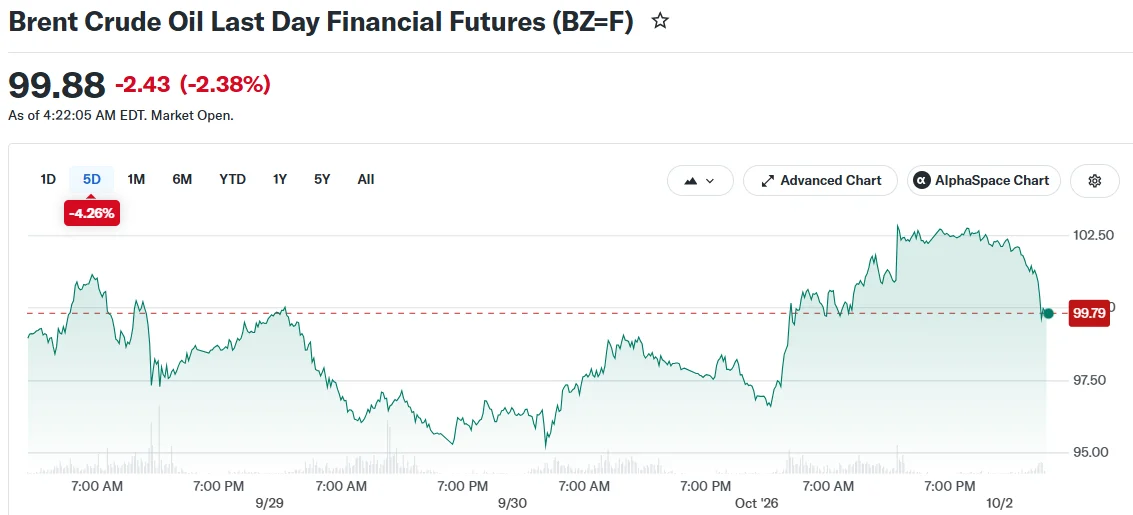
Thursday’s trading witnessed substantial upward movement across both contracts. Brent surged more than $4 while WTI advanced over $2 during that single session.
Military Buildup Reports Drive Thursday Surge
The rally came in response to reporting from the Wall Street Journal indicating Washington’s evaluation of deploying additional military assets to the Middle East theater.
Such developments heightened market anxiety that renewed military operations targeting Iran could interrupt petroleum exports from the region. Energy traders have maintained particular focus on the Strait of Hormuz, which serves as a critical transit point for worldwide oil shipments.
Pentagon sources indicated potential deployment of an additional carrier battle group accompanied by 10,000 naval personnel and Marines to Gulf waters. Such a move would expand President Trump’s strategic alternatives should he opt for intensified action against Tehran.
These tensions emerged precisely as supply concerns had begun to moderate. Industry analysts noted earlier in the week that petroleum shipments from the region were approaching volumes seen before the conflict began.
Refined product availability, conversely, has lagged behind crude restoration. Iran reportedly loaded zero crude barrels onto tankers throughout September. This data point suggests the U.S. naval presence continues effectively restricting Iranian access to global energy buyers.
Infrastructure Restart and Refined Product Constraints
Notwithstanding the military standoff, certain supply channels are showing signs of normalization. Saudi Arabia has brought its East-West Pipeline infrastructure back into service. The kingdom has simultaneously restarted loading operations at Yanbu following earlier interruptions.
China’s refining sector introduced an additional complication. Industry sources confirm that Chinese processors have suspended refined product shipments outside Hong Kong and Macau for the October period. This decision is projected to further constrain worldwide availability of diesel, aviation fuel and gasoline.
Diesel markets face particular stress from diminished Russian shipments. Additional anxiety stems from potential limitations on American fuel exports.
Washington has allegedly requested European partners to evaluate releasing strategic diesel stockpiles. Such action would help alleviate fuel market strain while authorities monitor refinery throughput and inventory positions.
Market observers noted that recovering Middle Eastern production combined with tepid worldwide consumption have capped price appreciation potential. Brent has nevertheless climbed 70% year-to-date as the Washington-Tehran confrontation enters its eighth month.
Diplomatic breakthroughs remain elusive. Market participants are simultaneously monitoring how elevated energy costs might influence inflation forecasts.
Persistent crude price increases could complicate monetary policy determinations for central banking authorities. This particularly affects the U.S. Federal Reserve, which continues weighing economic expansion concerns against inflationary pressures.
As of Friday’s opening session, both benchmark contracts remained beneath Thursday’s session highs, with market participants monitoring further developments regarding American military positioning in Gulf waters.
Source: Parameter