



FILTERED RESULTS
FILTERS
•
·
·
FILTERED RESULTS
China’s A-share exporters face rising currency losses in H1 2026 says UBS
UBS sees macro beta shifts in Japan stock market positioning
Syria to boost agriculture with $175m from World Bank
Opec+ likely to keep output targets steady at Sunday meeting
China Delivers Latest Drip Feed of Stimulus to Keep GDP Target Floor in Reach
Legal challenges to Trump’s tariffs
Bond Yields Not High Yet: Pedersen on Inflation Risks
Argentina Stock Prices: Rally Narrows to Oil Companies (YPF, VIST)
Trump’s coal drive plays into Beijing’s hands
Morning Bid: October doubts
Hormel Foods to buy Brakebush in deal valued at $1.06 billion
Elf Beauty stock gains on strong sales data from Canaccord tracker
Stocks and Bonds Pause Ahead of US Data, Micron: Markets Wrap
Iran Increases Alert Level at 46 Infrastructure Facilities
Oracle Expands Financial Crime and Compliance Management Portfolio with New AI Tools
Crude Oil Prices Decline Amid US-Iran Negotiations and SPR Release
Flydubai Flight FZ1081 Diverts Back to Dubai
Apple (AAPL) Stock Dips 3% Despite Strong iPhone 18 Pro Performance in China
Novo Nordisk (NVO) Stock: Oral Wegovy Users Shed 4% Body Weight in OCTANE Study
US Dollar Maintains Strength Near Two-Month Peak Ahead of Critical Inflation Report
Dubai-Israel Flight Makes Saudi Emergency Landing After Incident
UAE-Israel flight diverted after distress signal and 20,000ft drop
European Markets Surge on Tech Rally Fueled by Trump’s AI Infrastructure Push
DeepSeek and Huawei Target a Key Source of Nvidia’s A.I. Dominance
ABN AMRO Bank Extends Partnership with Infosys for AI Transformation
Equity positioning stays overweight, but summer extremes have eased: Barclays
GEO and SWBI: Decoding Five Election Cycles of Wall Street’s Most Politically Wire
Japan economic panel members underline BOJ independence
Inflation jumps across euro zone, raising pressure on ECB to hike
Zambia Bucks Global Trend, Delivers Deepest Rate Cut in 15 Years
Apple to Launch New Smart-Home Products on October 13
UK FCA Begins Accepting Applications for Crypto Firm Authorization
Needham Maintains Buy Rating on SpaceX with $250 Price Target
Why is Yiren Digital stock climbing today?
UK regulator warns Brink’s takeover could hurt ATM competition
Ireland reports retail sales growth in August
Russia warns NATO over Kaliningrad nuclear threat
Goodhart and Pradhan on the end of monetary independence
Sterling Rises on Strong U.K. Data, Prospect of Fiscal Discipline And Improved EU-U.K. Ties
Payhawk Expands European Presence with New Offices in Stockholm and Warsaw
Bank of England Warns of Potential AI Market Correction
OpenAI Faces Lawsuit Over Cyberattack Linked to AI Systems
Porsche Shifts Focus Back to Petrol Vehicles Amid Declining EV Sales
Internet Customers Seek Better Deals, Putting Pressure on Cable
Russia strikes energy facilities in Kyiv and nearby areas in prelude to winter assault
US trade court to weigh challenge to Trump’s forced labor tariffs
Facing climate lawsuits, Big Oil again turns to US Supreme Court
Italian inflation surges above 4%, in headache for PM Meloni
Wall St regulator to unveil new retail investor proposals for private assets
UK household energy cap seen rising 16% in January on Middle East gas shock
Gold Steadies Ahead of Critical Fed Inflation Gauge Release
Remy Cointreau Sells Debut Hybrid Bond as It Pursues Turnaround
Tullow Oil Shares Drop 50% After Loss of Ghana Tax Dispute
Surge in Bond Yields Is Spilling Over to the Dollar
Gold Holds Steady as Market Awaits Key US Inflation Indicator
Infleqtion (INFQ) Teams Up With Riverlane on Quantum Error Correction: Is the Stock a Buy?
U.S. President Trump Engages in Key Meetings and Celebrations on September 30, 2026
Ethiopian Airlines to sign agreement with Boeing for 10 freighters
Why is Moderna stock down 4% today?
Poland inflation forecast at 3.1% for 2026, central bank survey shows
Greece retail sales volume climbs 5.2% in July
Boeing (BA) Stock Surges on $20B Navy F/A-XX Fighter Jet Award
Treasury Yields Fall on Dovish-Leaning Fed Speech; European Yields Follow Suit
Chilly Markets and AI Safety Debates Derail Wall Street’s Blockbuster IPO Season
Israeli Settlement Boycotts Risk Triggering Economic Isolation
Capitec Ups Provisions as It Braces for Inflation, Rate Pressure
Stocks Steady as US Data and Micron Pose Key Tests: Markets Wrap
Ryan Cohen Doubles Down: GameStop (GME) Stock Surges on CEO’s $10.6M Purchase
The Surprises That New CEOs Face
Oil Markets Rally Despite Persistent Middle East Supply Concerns


Key Highlights
- Brent crude climbed approximately 1% to reach $103.64 per barrel while WTI advanced 0.9% to $90.21 per barrel during Wednesday trading, bouncing back from previous session declines.
- Saudi Arabia resumed crude oil shipments from Yanbu, its Red Sea export terminal, following the restoration of East-West Pipeline operations to approximately 3.5 million barrels daily.
- The critical Strait of Hormuz waterway has remained effectively blocked since the end of February after coordinated U.S.-Israeli military operations against Iran, maintaining significant supply uncertainty.
- Qatari officials are facilitating negotiations between American and Iranian representatives aimed at potentially reopening the strategic waterway, although substantial progress remains elusive.
- Diesel prices in the United States surged to $6.53 per gallon recently, representing over a 70% increase from pre-conflict levels and prompting the Trump administration to explore potential export restrictions.
Oil prices climbed during Wednesday’s session following significant losses the day before. Market participants continue balancing improved Middle Eastern export flows against persistent concerns about maritime transportation challenges.
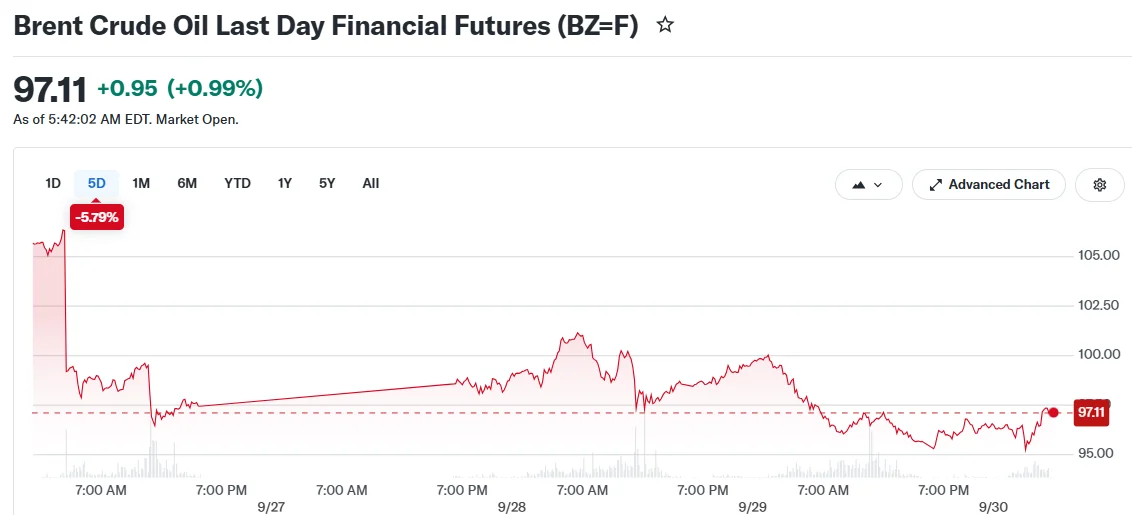
November-dated Brent crude futures advanced 1% to settle at $103.64 per barrel. West Texas Intermediate crude climbed 0.9% to finish at $90.21 per barrel. The previous trading session saw Brent decline 2.6% while WTI tumbled 3.5%.
Saudi Kingdom Brings Critical Pipeline Back Online
The market rally came after Saudi Arabia announced the resumption of crude oil shipments from Yanbu, its strategic Red Sea export facility. The restart followed the reactivation of the kingdom’s East-West Pipeline system, which provides an alternative shipping route bypassing the Strait of Hormuz.
State oil giant Saudi Aramco has distributed its October shipping schedule to international buyers. Maritime tracking information indicated nearly 10 million barrels of crude departed from Yanbu and the adjacent Al Muajjiz loading facility.
The Saudi government has successfully brought pipeline throughput back to roughly 3.5 million barrels daily. This volume represents approximately half the system’s maximum operational capacity, according to sources with knowledge of the operations.
The pipeline restoration has diminished some immediate supply concerns stemming from the regional military confrontation. However, the closure of the Strait of Hormuz continues to represent a substantial uncertainty factor for global oil markets.
The vital waterway has been essentially impassable since shortly after joint American and Israeli forces conducted military strikes against Iranian targets in late February. Diplomatic initiatives designed to reopen the shipping channel have yet to yield tangible outcomes.
Market strategists at Deutsche Bank noted that traders are factoring in an extended disruption period. They observed that increased crude flows from Persian Gulf producers have somewhat alleviated immediate pricing pressures.
International Negotiations and Surging Diesel Markets
The government of Qatar is serving as an intermediary in discussions between U.S. and Iranian officials. These negotiations center on a potential agreement that might encompass reopening the Strait of Hormuz alongside reducing certain American economic pressures on Tehran.
President Trump has publicly disputed media accounts suggesting the United States proposed sanctions relief to Iran. Iranian leadership maintains demands for specific preconditions before agreeing to reopen the strategic waterway.
Separate reporting from the Financial Times indicated the Trump administration is evaluating multiple policy responses to escalating domestic fuel costs. Among the measures under consideration is a potential prohibition on diesel fuel exports.
Diesel prices across the United States climbed to $6.53 per gallon in the most recent week. This represents an increase exceeding 70% compared to price levels recorded before hostilities commenced.
Analysts at Goldman Sachs calculated that crude oil shipments from Persian Gulf nations, including undeclared or “dark” tanker movements, totaled 23.3 million barrels daily over the preceding seven days. This volume aligns with the 2025 regional average.
Market observers indicate the critical question facing traders is whether the accelerated shipping pace can be maintained throughout October. The industry is monitoring closely for indicators of sustainable export stability.
The more actively traded December contract for Brent crude declined 0.8% to $95.34 per barrel during early Wednesday transactions. WTI futures for the corresponding period fell 0.6% to $88.87 per barrel in the same trading window.
Source: Parameter