



FILTERED RESULTS
FILTERS
•
·
·
FILTERED RESULTS
CFTC issues advisory restricting mention market event contracts
Goldman Sachs says China crude imports likely to stay low
South African inflation rises modestly; most analysts still expect rate hike
Iran calls Trump threats in UN speech a sign "desperation" - Al Jazeera
QFZ, Honeywell Technologies partner to establish manufacturing and service hub in Qatar
Zelensky Says Putin Is Unlikely to Curb Attacks Without U.S. Pressure
Euro at Two-Month Low as Options Traders Add Downside Hedges
Bunq Launches Wero Payment Service Across Four European Markets
Key Economic Indicators to Watch in Global Markets Today
South Africa CPI Rises Less Than Expected Before Rate Call
Kremlin Calls for Ukrainian President's Visit to Moscow for Future Discussions
UK Watchdog Seeks Expanded Search Options for Google Users Amid AI Competition
Trump's Board of Peace Announces $2.45 Billion Gaza Recovery Plan
Why is TriSalus Life Sciences stock surging today?
Germany reviews takeover law amid Unicredit-Commerzbank bid - report
USA Rare Earth: How the Magnet Maker Landed $1.6 Billion in US Funding
OECD Warns of Faster Global Inflation, Sees Rate Hikes at Fed, ECB, BOJ
Swiss lawmakers back tougher bank capital rules in blow to UBS
European Markets Gain Ground Amid Oil Price Decline and Tech Sector Rally
AI Rally, Weaker Yen Set the Stage for Japan’s Market Return
Royal Caribbean to buy 50% stake in Sandals Resorts for $3bn
Turkey says nearly half a million investors affected by funds liquidation
Kremlin Criticizes UK Remarks at UN for Heightening Anti-Russian Sentiment
ARK Invest Acquires $25M in Rocket Lab (RKLB) Stock While Reducing Alphabet Holdings
ECB Official Comments on Inflation Outlook and Energy Costs
Greenland welcomes US military pact but trust still shaky
UK regulator proposes giving consumers more search choice on Google
OECD raises UK 2026 growth forecast, cuts inflation outlook on energy support
Global economy defies high oil prices, OECD says, but warns of downside risks
Luno Acquires GTXN, Appoints New CEO
Firmus Technologies Pursues $10 Billion Financing for Indonesian Data Center
UK Urged to Cut Spending as Growth Slows in OECD Forecasts
Archer Aviation (ACHR) Stock Climbs 5% on Air Show Demo Plans
Goldman Sachs emerges as lead bidder for $37bn credit manager Palmer Square
PE competition for quality assets intensifies as 82% expect deal prices to rise
Pornhub’s age checks probed by UK watchdog
Gold prices drop amid stronger dollar, higher-for-longer rate outlook
Murex Partners with Google Cloud to Deploy MX.3 Platform
Why is KWS SAAT stock sliding today?
Loans to loved ones can ruin relationships. Here’s how to manage them better.
Airtel Money Plans London IPO as UK’s Listings Push Bears Fruit
DAAM signs funding agreement with Qatar Foundation to support Al Ghorrah for Literature and Arts 2027
How to Gain Anthropic Exposure Through This New ETF Before the IPO
Broadcom (AVGO) Stock Dips as Beijing Scrutinizes Network Switches in Government Data Centers
CVC-backed Bamboo Insurance postpones planned US IPO
CD&R and Warburg Pincus emerge as leading bidders for Canaccord Wealth
EQT launches Middle East platform with new Abu Dhabi office
Almost ten million people took part in ECB survey on new euro banknotes
Stock Market Today: Dollar Climbs, European Diesel Futures Jump on Possible U.S. Export Ban
Private-Credit Firms Are Buzzing About Getting In on JPMorgan’s Card Empire
$5 Billion Flurry of Nearly Identical Kalshi Trades Draws Scrutiny
Apollo private credit fund sees redemption requests fall in Q3
Cancer-Care Provider Oncoclinicas Is Brazil’s Latest Corporate Meltdown
Founders of Tink Launch New Compliance Startup Freda
Financial Conduct Authority Urges Banks to Strengthen Measures Against Money Mules
Business Surveys Point to Surprise Pickup for Eurozone
UK Economic Growth Cooled, PMI Data Show (Video)
Micron (MU) vs. SanDisk: Which AI Memory Play Offers Better Long-Term Upside?
ASIC halts three Remara private credit products
IDP Education rejects Blackstone’s sweetened AUD695m bid,
Smartstream Launches AI-Enhanced Reconciliation Tool
Form3 Introduces AI-Enabled Payments Infrastructure
Oil holds near two-week lows on easing supply concerns
Euro gas treads water near 3-week lows as Tehran hints Hormuz reopening
Why is Arcadis stock sliding today?
Italy eyes 2026 deficit under EU 3% cap, raises GDP growth view - report
UK business growth slows as inflation pressures build
Reap and Visa Launch Stablecoin Card Program in Over 100 Markets
Microsoft (MSFT) Shares Dip as Xbox Announces 268 Layoffs and Studio Shake-Up
European Gas Markets Stabilize at Three-Week Lows Amid Iran Strait of Hormuz Diplomacy


Key Takeaways
- Natural gas markets in Europe maintained positions near three-week lows following Iranian diplomatic signals regarding potential Strait of Hormuz reopening.
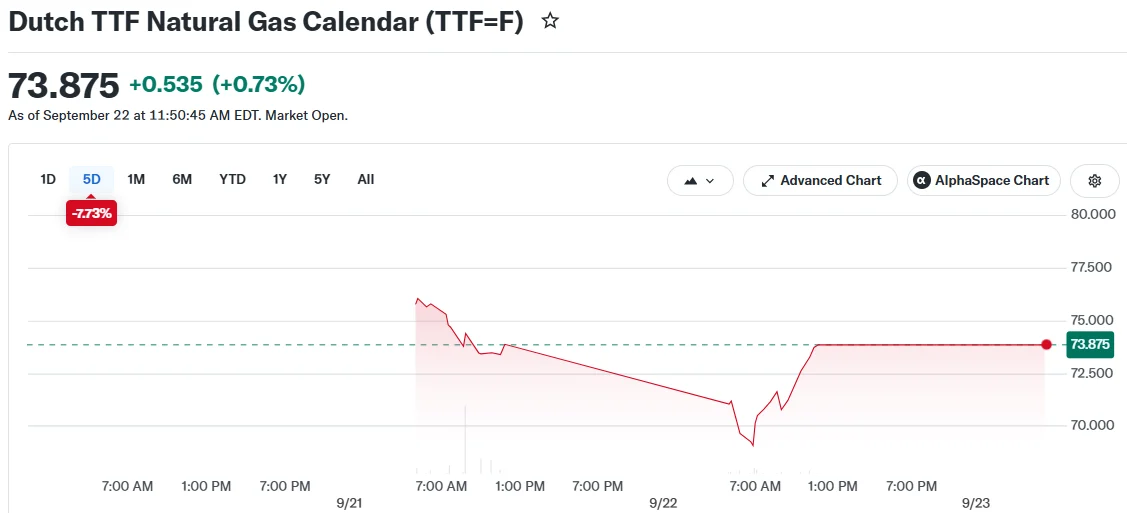
- The Dutch TTF front-month contract traded approximately €72.90 per MWh, with British NBP gas also holding at recent multi-week lows.
- Iran’s reopening conditions include reduced U.S. military presence and removal of blockades affecting Iranian port access.
- European storage facilities are roughly 70% capacity, creating vulnerability as winter approaches.
- Declining energy prices provide inflation relief, though supply uncertainty continues.
Natural gas prices across Europe maintained their position near three-week lows on Wednesday as market participants evaluated Iran’s potential reopening of the Strait of Hormuz while simultaneously considering the continent’s below-average gas storage situation entering the winter period.
The Dutch TTF front-month benchmark, a key European gas pricing reference, declined approximately 0.6% to reach €72.90 per megawatt-hour, representing levels not seen since early September. Meanwhile, British wholesale gas prices experienced modest gains but continued trading near their recent low points.
Diplomatic Signals from Tehran Reduce Geopolitical Risk Premium
Tehran has communicated to Reuters that the Strait of Hormuz could potentially reopen within a seven-day timeframe, contingent upon the United States reducing military activities in the region and removing blockades currently affecting Iranian port operations. Iranian officials indicated their United Nations General Assembly delegation possesses authorization to engage in renewed diplomatic discussions with Washington.
These diplomatic overtures have prompted energy traders to pare back some geopolitical risk premium previously factored into European natural gas valuations and international oil prices. Brent crude has similarly declined to levels below $100 per barrel as markets respond to improved prospects for Middle Eastern energy transportation routes.
Saudi Arabia has additionally resumed operations at its strategic East-West pipeline following an earlier suspension. This critical infrastructure enables crude oil transport to Red Sea terminals while circumventing the Strait of Hormuz, potentially providing additional supply flexibility.
Nevertheless, any Hormuz reopening remains contingent on specific conditions. Iranian authorities have emphasized that Washington must demonstrate concrete actions toward reducing military pressure, while historical diplomatic engagement has been characterized by inconsistent progress.
Continental Storage Deficit Creates Winter Vulnerability
While declining prices have reduced immediate market stress, Europe continues facing significant exposure as the winter heating season approaches.
Current European gas storage stands at approximately 70% capacity, substantially below typical seasonal benchmarks. Reuters has highlighted that storage levels are historically weak while European dependence on liquefied natural gas imports has intensified.
This situation creates market vulnerability to sharp temperature declines or renewed Middle Eastern supply interruptions. Restricted flows through the Strait of Hormuz have already impacted certain LNG export volumes, particularly from Qatar, which ranks among the world’s leading suppliers.
Ongoing Norwegian pipeline maintenance has further constrained European supply in recent periods, amplifying the critical importance of LNG availability and adequate storage capacity.
Energy Price Moderation May Alleviate Inflationary Pressures
Sustained reductions in natural gas and oil prices would provide meaningful benefits for Europe’s inflation trajectory. Energy costs significantly influence household utility expenses, industrial production costs, and broader consumer price indices.
This dynamic could potentially affect European monetary policy expectations if reduced energy prices diminish inflationary pressures. Alternatively, renewed gas price increases could reinforce central bank arguments for maintaining restrictive policy positions for extended periods.
Currently, market participants appear to be incorporating higher probabilities for improved Middle Eastern energy flows. European gas markets remain positioned near three-week lows, though inadequate storage levels ensure continued market sensitivity to winter weather patterns and geopolitical developments.
Source: Parameter