



FILTERED RESULTS
FILTERS
•
·
·
FILTERED RESULTS
UK Markets Tumble as Gilt Yields Reach 28-Year Peak
Tesla (TSLA) Stock Climbs on European Market Momentum
10-Year Treasury Yield Reaches Highest Point Since 2002: What Investors Need to Know
Four potential positives from higher bond yields
UK Manufacturing PMI Shows Slight Decline in September
CBOE Volatility Index Reaches Two-Week High
10-Year Treasury Yields Reach Highest Level Since 2007, Impacting Global Stock Markets
Diesel Supply Tightness Reported Across Europe and Beyond
Alphabet shares up in premarket trade after Gemini 4 Argon launch
Proxy adviser calls for Australia’s ASX shareholders to reject pay report
Italy’s unemployment rate climbs to 6.2% in August
Eurozone manufacturing hits 52-month high in September
Euro slides to 17-month low, hit by rates and inflation cocktail
Hewlett Packard Enterprise (HPE) Stock Soars to All-Time High on $1.2B Vultr Partnership
BMW (BMWG) Stock Hits 6-Year Low Amid Major Restructuring and AI Integration Plan
Berkshire Hathaway Doubles Down on Lennar (LEN) Stock with $54M Purchase
CVC DIF names new chair of North America
AI data centre boom drives new private investment in clean energy
India Oil Refiners Shift Tactics, Hire Ships to Cross Hormuz
Italy's 10-Year Government Bond Yields Hit Highest Level Since November 2023
Antin agrees sale of majority stake in Vicinity Energy to Harrison Street
Airtel Money Plans UK IPO Set to Be Biggest in Five Years
French 5-Year Credit Default Swaps Reach Highest Level Since 2013
Exclusive-US tells France and Germany to release diesel stocks or face US export ban, sources say
Stock Market Today: Global Bond Selloff Deepens
Money Managers Are Asking Clients to Give the Bond Market Another Chance
Sycamore nears $9bn sale of Boots to Weston family
Ares leads $2bn financing for Phoenix Tower International
Boehringer, Zealand Obesity Drug’s 13% Weight Loss Disappoints
US Stocks Waver as Yield Surge Offsets AI Gains: Markets Wrap
TPG Raises $10 Billion for 2nd Private Equity Climate Fund
UK Long-Term Borrowing Costs Hit 6% for First Time Since 1998
Pandora Sees US Consumer Mood Remaining Low as Inflation Bites
French Bonds Flirting With Crisis Mode: Market Analysis
Global bond sell-off deepens as 10-year Treasury yield hits highest since 2002
UAE investigates if Flydubai attack was ‘terrorist activity’
Japan plans $140bn AI data centre push with Dell and Jera
Eurozone Manufacturing PMI Reaches Highest Level in Over Four Years
DAX hits oversold RSI 24.6 at 25,016: Live levels
FTSE 100 today: Stocks fall as UK 30-year gilt yield hits near three-decade high
Greece manufacturing growth eases in September amid cost pressures
French manufacturing expands at slower pace in September, PMI shows
Japan PM vows to underpin yen by boosting economic competitiveness
Micron’s AI-driven outlook; Nike to report - what’s moving markets
US Benchmark Yield Hits Highest Since 2002 as Bonds Sell Off
France's Manufacturing Growth Slows in September Amid Rising Price Pressures
United States Urges European Union to Release 120 Million Barrels of Diesel
Shock, awe and flip-flops at Emirates Palace
Nasdaq Futures Surge Over 1% Following Micron Technology (MU) Earnings Success
UBS pushes back against investor call to leave Switzerland
Euro area bank interest rate statistics: August 2026
Boeing (BA) Stock Gains 2% on Massive $20B Pentagon Fighter Jet Contract Win
September Market Split: Nasdaq Climbs on AI Momentum While Dow and Russell 2000 Tumble
Swiss Inflation Rises to Two-Year High on Energy Costs
France's September Manufacturing PMI Revised Upward to 50.6
U.S. Urges France and Germany to Tap Emergency Diesel Reserves
ECB Seeks Schnabel Successor in First Move to Post-Lagarde Era
Lenzing shares plunge 14% as €300 mln rights issue launched at steep discount
Should you still buy this AI-picked oil producer after its 32% run since July?
Czech manufacturing jobs grow at fastest pace since April 2022
European stocks start quarter lower as global yields hit multi-year highs
Italy's Manufacturing PMI Shows Modest Improvement in September
United Therapeutics (UTHR) Stock Soars 13% Following Major Patent Victory
Micron (MU) Stock Climbs Modestly Despite Record-Breaking Fiscal Q4 Performance
Bill Ackman Praises Anthropic as ‘Greatest Business Story’ Despite $42B Losses
Sanofi to pay Regeneron up to $8 billion to add new antibodies under Dupixent partnership
Sanofi gains after expanding Regeneron partnership with $8 billion deal
France Lays Out Budget in Latest Test of Investor Nerves
US Stock Gains Fade as Oil Fuels Bond Selloff: Markets Wrap
Gold Rebounds After Worst Month Since June as Cooler Inflation Dampens Fed Hike Speculation


TLDR
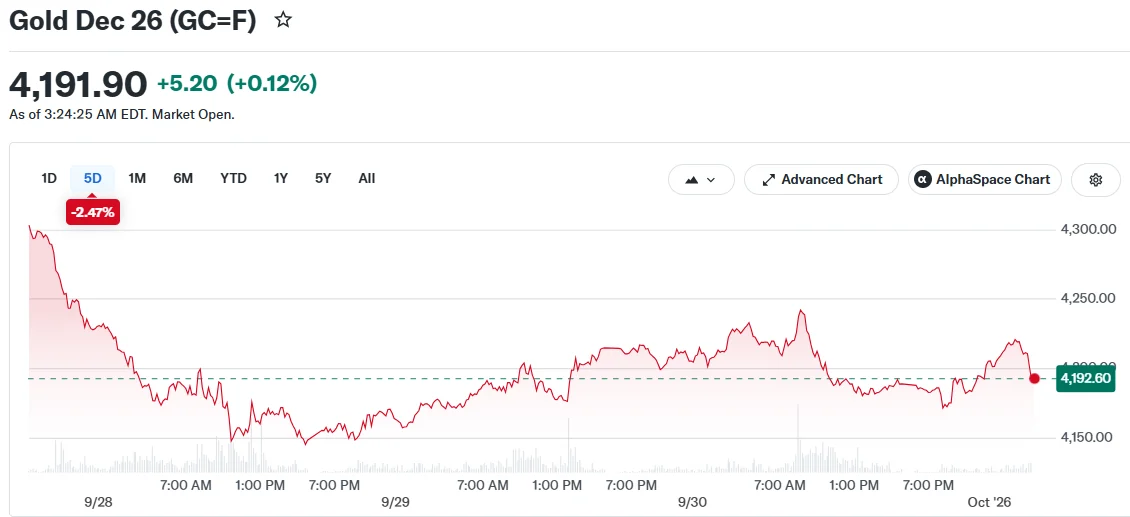
- The precious metal advanced 0.7% to reach $4,184.68 per ounce following September’s 6% decline, the steepest monthly loss since June
- Core PCE, the Federal Reserve’s favored inflation metric, increased 0.2% in August, falling short of market forecasts
- Probability of a Federal Reserve rate increase in October declined to approximately 34% from nearly 70% at the week’s start
- Robust consumer expenditure maintained Treasury yields close to multi-decade peaks, limiting the precious metal’s upside
- Market participants await Friday’s employment figures for additional insight into the central bank’s monetary policy trajectory
Gold prices experienced an upward movement on Thursday, recovering from September’s challenging performance. The yellow metal appreciated as fresh inflation figures provided market participants with a measure of reassurance.
As of 01:44 ET, spot gold increased 0.7% to $4,184.68 per ounce. December gold futures similarly advanced 0.7% to settle at $4,214.
Other precious metals followed suit, with silver advancing 1.4% to $61.27. Platinum registered a 0.5% increase to $1,725.77.
PCE Figures Alter Market Rate Projections
The central bank closely monitors the personal consumption expenditures price index as its primary inflation indicator. This metric, excluding volatile food and energy components, registered only a 0.2% increase in August.
The figure came in below analyst expectations. Additionally, the prior month’s data underwent a downward revision.
These milder inflation readings prompted market participants to reassess the Federal Reserve’s policy trajectory. The likelihood of an additional rate increase in October experienced a significant decline.
At the week’s beginning, futures markets priced in approximately a 70% probability of tightening. Following the inflation release, that figure tumbled to roughly 34%.
Reduced expectations for rate increases typically benefit gold. Since the precious metal yields no interest, elevated rates diminish its appeal relative to interest-bearing instruments.
Resilient Consumer Activity Supports Elevated Yields
Despite the encouraging inflation data, gold confronts ongoing obstacles. Personal spending in the United States accelerated in August at the quickest rate in more than twelve months.
This vigorous consumer activity indicates the economy’s capacity to withstand elevated borrowing costs. Consequently, Treasury yields remained anchored near multi-decade elevated levels.
Elevated bond yields exert downward pressure on gold valuations. They raise the opportunity cost associated with maintaining a non-yielding asset.
The U.S. Dollar Index maintained its strength, edging up 0.2% to 101.66. A firmer greenback generally increases the precious metal’s cost for international purchasers.
September witnessed a 6% decline in gold prices. This represented the metal’s poorest monthly showing since June.
The downturn followed the Federal Reserve’s first rate increase since 2023. The monetary authority additionally indicated potential further policy tightening.
Throughout September, sovereign bond yields climbed globally. Market participants expressed heightened concern regarding escalating public debt levels and fiscal deficits.
These anxieties elevated the term premium component of yields. This represents the additional compensation investors require for bearing longer-duration debt exposure.
The broad-based yield increase complicated gold’s ability to maintain value throughout the previous month.
Moving forward, market attention centers on Friday’s employment statistics release. This dataset could provide crucial indicators regarding the Federal Reserve’s interest rate intentions.
The labor market report will likely influence near-term gold price expectations. Financial markets continue to exhibit heightened sensitivity to indicators of economic vigor or fragility.
Presently, gold has achieved a degree of stabilization following a challenging period. However, sustained elevated yields indicate the metal continues to face considerable pressure.
Source: Parameter