



FILTERED RESULTS
FILTERS
MCap $2.9T +1.1%24h Vol $101.4B -35%Fear & Greed 71/100Alts Index 61/100
BTC.D 58.6% +0.3%Stable.D 9.1% -0.1%ETH.D 11.4% 0%Others.D 20.9% -0.2%
SOON$0.4657+36.37%•STONK$0.2919+22.27%•NIGHT$0.0364+17.63%•QNT$300.33+16.71%•PROM$6.543+14.63%•WLD$0.5555+11.66%•ZRO$1.799+9.75%•KSM$5.108+9.45%•PROS$0.7374+9.37%•NEAR$5.348+9.32%•
AI$0.1811-13.33%•TIBBIR$0.2944-12.76%•BTW$1.158-11.27%•BR$0.7593-10.7%•LIT$4.028-9.65%•BP$1.207-8.52%•CVX$2.185-7.48%•SYRUP$0.2358-6.92%•2Z$0.0640-6.84%•AAVE$162.12-6.23%•
•
·
·
FILTERED RESULTS
119,000,000 $USDC (119,009,996 USD) transferred from #Aave to unknown wallet...
Hyperliquid co-founder Jeff Yan: The real advantage of on-chain finance is self-custody and transparency, not 24-hour trading
Unpacking Telegram’s evolving crypto ecosystem
Comer Seeks Crypto.com, Hyperliquid and PredictIt Records…
Bitcoin Price Prediction for October 2026: $40K Bottom Risk Vs Low-$80K Hold
Polymarket Rolls Out Self-Exclusion, Deposit Limits in New Trust & Safety Push
Sept 30 Update:#Bitcoin ETFs:1D NetFlow: +628 $BTC(+$53.48M)7D NetFlow: +8,716...
US FTC launches comprehensive investigation into Anthropic, OpenAI and other superintelligent models
Balchunas: Bitcoin ETF inflows recover, bears may enter prolonged hibernation
1inch Has Released the Digital Publication ReDeFine Money, and the Proceeds Will Be Donated to Charity
Bastion Trading is urging Solana treasury company SkyAI to overhaul its board, raising concerns...
Bitcoin futures open interest tops $50 billion as options market signals a new bullish...
US stocks open, S&P 500 up 0.17%
Polymarket Implements Consumer Protections Amid Legal Challenges in New York
Cardano tapped by Brazil's Petrobras for pilot tracking clean fuel carbon footprint
Fables plans FABLES token TGE on October 20, PROLOGUE snapshot scheduled for the prior weekend
Petrobras Utilizes Cardano Blockchain for Tracking Sustainable Fuels
Surge in HYPE Options Activity Ahead of October 9 Expiry
OpenAI Introduces Dots: Breaking Down the AI Agents That Work for You While You Sleep
US Core PCE Price Index Falls to 3% in August, Lowest Since FebruaryThe US core PCE price index...
Singapore crypto activity grows 55% as broader region contracts
Market Overview: BTC : $85429 ETH : $2735.95 BNB : $776.72 SOL : $122.29 Market Cap :Total :...
Bitcoin Price Surges Past $85K as Bulls Muscle Back Into the Fight
Arthur Hayes Predicts Ethereum Will Reach $10K by Year-End
Bloomberg Terminal Launches Stablecoin Dashboard, Function Code RWAS
Illinois Draft Rules Reveal Which Crypto Moves Trigger Its New Tax
Cardano tapped by Brazil’s state oil giant to track cleaner jet fuel and diesel
Bitcoin could react to new 40M barrel US oil sale before a single barrel is delivered
Bitcoin Surges Above $85,000 Following Cooling Inflation Data
Allium Launches Stablecoin Tracking Function on Bloomberg Terminals
Bonk Guy (@theunipcs) has now made over $1M on $SI!He invested $168K to buy 19M $SI, now worth...
U.S. Short-Term Interest Rate Futures Increase Amid Rate Hike Speculation
U.S. GDP Growth for Second Quarter Reaches 2.2%
U.S. Core PCE Price Index Shows Year-on-Year Increase of 3% in August
America’s economy grew at a 2.2% annual rate in the second quarter,...
Coinbase perpetual futures trading outside the US to pause for about 1 hour starting 17:00 on October 1
Trump Is Considering Former SEC Chair Jay Clayton for an AI Adviser Role
Alleged North Korean Bitget Hackers Shield $3.8M in Zcash’s Ironwood Pool, ZachXBT Says
CFTC Readies Action on Prediction Market Promos, Expected This Week
Traders increase bets on Fed rate hike
US core PCE annual rate comes in below expectations, hitting a six-month low
Polymarket Implements Responsible Gambling Features Amid Regulatory Scrutiny
Polymarket Adds New User Protections, Users Can Now Exclude Themselves From The Platform From 30...
Trump Announced “Super Intelligence” Era and Reached Agreement with Tech Giants on Four Levels of Oversight
Solv Says BTC+ Is Redeeming Normally After One Address Hit a Risk Review
US Private Sector Job Growth Tops ForecastsPrivate businesses in the US added 90K jobs in September...
US September ADP employment at 90,000, beating the expected 70,000
American private employers added 90,000 jobs in September, exceeding...
Aptos (APT) Price Prediction 2026, 2027 – 2030: Will APT Price Hit $30 by 2026?
SlowMist Revealed Details of the Attack on Bitget’s Hot Wallets
Michael Saylor Advocates for Collaboration Among Bitcoin Treasury Companies
FCA opens crypto authorization window ahead of 2027 UK regime
107,085,329 $USDC (107,098,126 USD) transferred from USDC Treasury to Unknown Whale...
Cardano Foundation and Petrobras Collaborate on Blockchain Fuel Applications
AMD vs. Intel: Which Stock Could Rise More From Here?
Coinbase just completed its US derivatives stack but its biggest bet still sits outside it
Crypto advocacy group Stand With Crypto rolls out its first round of Senate endorsements after
Morning Minute: Robinhood Adds Perps, Weekend Stocks, and AI Traders
Attackers in Bitget Exploit Begin Transferring Approximately 2,700 ZEC to Ironwood Shielded...
107,085,329 $USDC (107,096,145 USD) transferred from unknown wallet to USDC Treasury...
CFTC Investigates Former Congressman Adam Kinzinger Over Prediction Market Trades
Gram (prev. Toncoin) Price Prediction 2026, 2027 – 2030: Will TON Price Reach $10?
BetFury Futures: An x1000 Multiplier and Slippage-Free Crypto Trading
Saylor: Bitcoin treasury companies like Strategy and Strive can jointly drive the digital credit market
CFTC Investigating Adam Kinzinger Over Kalshi Bets on His Own Pardon: Report
Surge in Altcoin Exchange Deposits Signals Market Activity
Scorechain Expands Compliance Tools to Sui Network
UK Financial Conduct Authority Starts Accepting Crypto Authorization Applications
250,000,000 $USDC (250,027,875 USD) minted at USDC Treasury...
Top 6 Antidetect Browsers: Which to Choose and How to Pay with Crypto


Article brief
 An anti-detect browser isn’t only for arbitrage traders or crypto folks. We break down how 6 popular solutions differ, how much they cost, which one to choose for different tasks, and how to pay for a subscription with cryptocurrency.
During regular browsing, a website collects a huge amount of data about the user — OS version, screen resolution, language, time zone, and dozens of other parameters combine into a digital fingerprint that helps match repeat visits.
Anti-detect browsers help protect user privacy by allowing controlled shaping of this information and separating sessions. This also enables the safe use of multiple accounts across different activities, including participating in token airdrops.
The Incrypted editorial team looked into how anti-detect browsers work, why they are useful in the crypto industry, and how to choose the right solution with payment in digital assets.
Disclaimer: This material is for informational and educational purposes only. Anti-detect browsers are used for privacy, testing, development, and managing permitted work profiles. They do not override legal requirements, sanctions restrictions, KYC/AML procedures, or the rules of third-party platforms. Before getting started, review the terms of the specific service and the regulations in your jurisdiction.
What Are Anti-Detect Browsers and Why Do You Need Them?
An anti-detect browser is a tool for creating separate digital environments, each of which stores its own information and set of parameters. A web resource receives this data and can use it to build a device’s digital fingerprint. Typically, this refers to characteristics such as:
- browser and operating system version
- screen resolution, language, and time zone
- available fonts and hardware specifications
- Canvas, WebGL, WebGPU, and AudioContext results.
To separate environments, an antidetect browser creates a separate user storage for each profile and its own set of the parameters listed above.
In other words, while a VPN and a proxy change the public IP address and traffic route, an antidetect browser works with the part of identification data that relates directly to the user’s device.
In practice, antidetect browsers are used for website testing, ad campaign checks, separating work sessions, and automating routine online actions.
However, you shouldn’t treat an antidetect browser as a tool for complete anonymity — the site you visit can still take into account the IP address, account data, payment details, and other information. A digital fingerprint is only part of the overall identification system.
Where Antidetect Browsers Are Used in the Crypto Industry
In Web3, the main value of antidetect tools is that different profiles can store independent cookies, local data, and sets of extensions. This is convenient — and even necessary — when testing decentralized applications or using multiple accounts.
One of the most common reasons for using antidetect services is participating in airdrops. However, it’s important not to mix up two different tasks here — an isolated profile helps separate sessions, but it doesn’t remove the project’s own restrictions on multi-accounting.
If a company bans multiple linked participants, a multi-profile browser is not worth using as a bypass method. System checks and anti-sybil filters often scan a complex set of data to establish links between accounts, which is not limited to a digital fingerprint alone.
In DeFi, separating profiles is also useful for managing wallets and extensions. Independent environments can store separate cookies, history, and add-on data, reducing the risk of accidentally carrying state over between work sessions and the chance of all profiles being compromised at once.
Another direction that has gradually become the standard is automation. Some anti-detect browsers offer visual builders for action chains and synchronizers, while others let you launch profiles via an API with connections to external tools. However, access to these features is almost always limited by the plan’s terms.
6 Anti-Detect Browsers for Airdrops and Other Activities
For comparison, we selected six services with different usage and pricing models. We primarily compared the cost of entry, the availability of free access, support for automation and proxies, and the ability to pay with cryptocurrency.
The list should not be taken as a ranking that scores the quality of each browser. It is first and foremost an overview of the functionality of the most popular solutions.
| Browser | Free plan | Subscription cost | Crypto payments | Automation |
|---|---|---|---|---|
| Agent-X | 5 profiles, 5 proxy addresses | from $8/month | USDT, USDC | free AI agent for action automation, MCP, API, sync tool |
| Octo Browser | no | €10/month | BTC, ETH, USDT, USDC, TRX, LTC, BCH, GRAM | API for team collaboration. |
| Multilogin | 5 profiles | $11/month; from $7.08/month with annual billing | 80+ cryptocurrencies | Cloud Phones, API, Selenium, Puppeteer, Playwright |
| ShardBrowser | yes | not required | not required | API, MCP, SDK |
| AdsPower | 2 profiles | from $9/month | USDT, ETH, USDC | RPA, sync tool, API |
| Dolphin Anty | 5 profiles | $10/month | USDC, USDT | sync tool, API |
Agent-X
| Website | Profiles (free) | Cost | Crypto payments | Additional options |
| agentx-antidetect.com | 5 | free | USDT, USDC | 5 free proxies for 30 days; proxy store |
Agent-X is an antidetect browser with a focus on Web3 and automation.
In addition to the five profiles and proxies available in the free package, the antidetect browser has a built-in proxy store, where you can buy DC, ISP, and Residential Proxy at cost and add them straight to the profiles you need. The proxies support UDP and free p0f setup. You can also export them for use outside the browser.
Another strong point is support for popular account types —- Wallet, X, Discord, and Email. Bulk import in the required format is also available, followed by logging in within the selected profiles. In addition, the browser includes a Claude-based AI agent that can automate any actions at the app level and inside profiles. MCP, API, and a sync tool are supported.

It is also worth noting that the product has passed audits by Hacken and HackenProof.
- Pros: five proxies and five profiles for free, an anti-fraud system, built-in proxy purchasing with automatic integration into profiles, AI-powered action automation, and local data storage.
- Cons: currently available only for Windows and macOS.
Octo Browser
| Website | Profiles (free) | Price | Crypto payments | Extra options |
| octobrowser.net | no | from €10/month | BTC, ETH, USDT, USDC, TRX, LTC, BCH, GRAM | Android profiles; proxy store; API with Base |
Octo Browser is a more classic anti-detect browser. The main focus here is on isolating accounts, proxies, and ensuring that browser parameters don’t contradict each other. The service lets you create profiles for Windows, macOS, and Android, and the team updates its proprietary Octium core, based on Chromium, in sync with the main engine. For anti-detect, this is an important advantage, because an up-to-date version helps a profile blend in better with regular Chrome.
In addition to the desktop version, Octo Browser has dedicated mobile apps for iOS and Android, which lets you stay active even from a smartphone.
To protect an individual profile, you can set a password — in that case, its data on the server is protected with end-to-end encryption. Two-factor authentication is also available for the account.
Octo doesn’t have a free plan. Available tiers include:
- Lite — €10 for 30 days with three profiles
- Starter — €29 for ten profiles
- Base — €79 for 100 profiles and API access.
New Octo Browser users can get a 30% discount with the promo code INCRYPTED30.
The client also includes a residential proxy store, and you can pay for the subscription in cryptocurrency.
- Pros: easy-to-understand profile setup, transparent pricing, support for Windows, macOS, and Android, fast Chromium core updates, and a built-in proxy store.
- Cons: no permanent free plan, and automation and team collaboration are available only on higher-priced tiers.
Multilogin
| Website | Profiles (free) | Price | Crypto payments | Additional options |
| multilogin.com | 5 | $11/month; from $7.08/month with annual billing | 80+ cryptocurrencies, including USDT | Cloud Phones; API; Selenium, Puppeteer, Playwright; built-in proxies |
Multilogin is a multi-account platform that brings isolated browser profiles and cloud Android devices (Cloud Phones) together in a single interface. The service uses its proprietary Chromium-based Mimic engine, and each browser or mobile profile runs in a separate environment with its own session data and network connection. Built-in residential proxies cover more than 150 countries and 1,400 cities, and you can also connect proxies from an external provider.
The free plan has no time limit, does not require a bank card, and includes up to five cloud mobile or browser profiles. Paid plans start at $7.08 per month with annual billing and offer more profiles, API access, and higher usage limits. For automation, you can also connect Selenium, Puppeteer, and Playwright.
- Pros: a permanent free plan for five profiles with no card required, Cloud Phones and browser profiles in one interface, built-in residential proxies with broad geographic coverage, mature API automation, and a wide choice of cryptocurrencies for payment.
- Cons: paid plans get noticeably more expensive as the number of profiles grows, no-code RPA is not supported, and some bonus traffic and mobile minutes are limited by the plan.
ShardBrowser (ShardX)
| Website | Profiles (free) | Price | Crypto payments | Additional options |
| GitHub | yes | free | not required | engine-level modification; MCP; MIT launcher |
ShardBrowser is the most unusual entry in this roundup. It is a free launcher for the ShardX service that runs locally and does not require a subscription. It also gives users immediate access to 170 ready-made device configurations for Windows, macOS, and Linux. A key difference from most competitors is that ShardX changes some fingerprint parameters inside a modified Chromium build, rather than only by spoofing data at the page level.
That said, ShardX is noticeably less “out of the box” than other services. Proxies are paid separately, but you can connect either a third-party provider or ProxyShard — in the latter case, you can manage both the profile and the network connection from a single interface.
For automation, it offers a local API and an MCP integration that lets you control the browser via compatible AI assistants. The launcher itself is open source under the MIT license, but the browser engine remains closed.
- Pros: free access with no limit on the number of profiles, support for Windows, macOS, and Linux, 170 ready-made device configurations, partial fingerprint replacement at the engine level, and MCP integration
- Cons: proxies are paid separately, the product requires more hands-on setup, and the engine remains closed
AdsPower
| Website | Profiles (free) | Price | Crypto payments | Extra options |
| adspower.com | 2 | from $9/month | USDT, ETH, USDC | RPA, synchronizer, API |
AdsPower is primarily designed for those who need to manage a large number of accounts or use the service as a team. It supports Chromium and Firefox, can replicate actions across multiple windows at once, and automate routine operations without code. Compared with classic antidetect browsers, it is more of a full-fledged platform built for scaling and collaboration.
You can get started without paying, but the entry mode is limited to two profiles. The commercial plan for ten profiles starts at $9 per month, and more advanced tiers add cloud storage, expanded permissions, and other collaboration tools. Direct crypto payments are supported.
- Pros: ongoing free access for two profiles, support for Chromium and Firefox, a synchronizer and no-code automation, team features, and cloud storage on paid plans
- Cons: some useful features are only available by subscription, and the number of profiles and daily launches is limited by the selected plan
Dolphin Anty
| Website | Profiles (free) | Price | Crypto payments | Extra options |
| dolphin-anty.com | 10 (5 from mid-September) | from $10/month | USDC, USDT | synchronizer, automation, API |
Dolphin Anty focuses on a low barrier to entry. The pricing page already lists a Free plan with five profiles, although the switch from the previous limit of 10 is scheduled for mid-September 2026.
Starter costs $10 per month, includes 20 browser profiles, and lets you increase the number up to 60. It also unlocks the synchronizer and additional automation tools. However, this plan is designed for one user and comes with a monthly quota for creating new configurations. For a team, you’ll need Base from $89.
- Pros: five profiles for free and Starter for $10, a synchronizer, additional automation tools, and robust proxy features.
- Cons: Starter is for one user and has a monthly quota, and team collaboration starts only with Base at $89 per month.
How to Pay for an Antidetect Browser With Cryptocurrency
As of August 2026, five services in this roundup accept digital assets directly — Agent-X, Octo Browser, Multilogin, AdsPower, and Dolphin Anty. ShardX doesn’t require a subscription payment at all, and you can also buy proxies for accounts with cryptocurrency. Payment flows vary from service to service, but overall they remain intuitive.
If direct payment is unavailable due to your country, network, or payment provider, there are two fallback options — a crypto card or converting to fiat in advance.
Crypto card
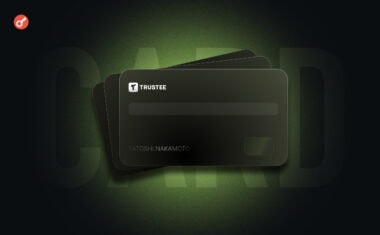
Crypto cards let you use digital assets for everyday payments. One option for users in Ukraine is the Trustee Plus mobile wallet with a virtual Visa card. For an antidetect service, this kind of payment is processed like a regular card transaction.
Before using it, it’s worth checking whether the card is available in your country, which assets and networks are supported, fees, limits, and verification requirements. If Trustee Plus doesn’t work for you or isn’t available, many other providers offer similar products across different jurisdictions.
Pre-conversion via P2P or an exchange service
As an alternative, you can first swap digital assets into fiat and have the funds credited to a bank card. Crypto exchange services and P2P platforms work well for this. But it’s important to keep in mind that in some cases, the exchange service or the bank may request identity verification or proof of funds.
On a P2P marketplace, a user sells cryptocurrency to another participant, while the exchange holds the asset in escrow until payment is confirmed. We covered how P2P services work using the Binance crypto exchange as an example, as well as the key precautions when using such platforms, in an overview article.
Conclusions
An antidetect browser is best seen primarily as a tool for managing separate digital environments or a solution for improving privacy, rather than a way to anonymize yourself or bypass account limits. Its value shows up where it’s important not to mix sessions, accounts, wallets, and work data.
That said, the quality of such services is determined not by the number of adjustable parameters, but by how consistently the profile works and how convenient it is to use for everyday tasks. So it’s better to choose a service not by the maximum number of features, but based on a specific operating model. Paying for advanced capabilities only makes sense when you actually need them.
It’s also worth considering the availability of the product itself and the payment methods. Cryptocurrency can simplify settlement where traditional methods are unavailable or restricted, but it does not affect the rules of third-party platforms or KYC/AML requirements.
FAQ
The roundup includes Agent-X, Octo Browser, Multilogin, ShardBrowser with the ShardX engine, AdsPower, and Dolphin Anty. The differences between them go beyond pricing and free-tier limits, and also cover fingerprint modulation architecture, automation, and team features.
Yes. ShardX does not require a subscription, Agent-X and Multilogin provide 5 profiles for free, and AdsPower provides 2. Dolphin Anty is also available for free, but will reduce the starting limit from 10 to 5 starting in mid-September 2026.
It is impossible to name a single service as the undisputed leader in protection, since this criterion includes profile isolation, the quality of fingerprint modulation, account security, and data handling. There is no single independent audit of all services using the same methodology.
As of August 24, 2026, direct payment with digital assets is supported by Agent-X, Octo Browser, Multilogin, AdsPower, and Dolphin Anty. ShardX is distributed for free and does not require a separate subscription. It is best to confirm the available coins and networks right before making a transfer.
Сообщение Top 6 Antidetect Browsers: Which to Choose and How to Pay with Crypto появились сначала на INCRYPTED.
Source: Incrypted